7 Best Wool Winding Stations for Yarn Preparation
Streamline your knitting with our guide to the 7 best wool winding stations. Discover top tools for efficient yarn prep, storage, and tangle-free projects.
Transforming a tangled hank of hand-dyed wool into a tidy, center-pull cake is one of the most satisfying rituals in a knitter’s life. Without the right equipment, however, this process can quickly turn into a frustrating afternoon of fighting stubborn snarls and knots. Choosing the correct winding station depends entirely on your project volume, the delicacy of your fibers, and how much manual labor you want to invest. Let’s explore the best tools to streamline your prep work so you can spend more time with needles in hand.
Stanwood Needlecraft Large Metal Yarn Ball Winder


If you frequently work with massive 400-gram hanks of bulky, rustic wool, the Stanwood Large Metal Winder is the gold standard. Unlike plastic models that can flex or skip under tension, this unit features a heavy-duty metal crank and gear system that handles significant weight with ease.
The primary advantage here is the metal gear construction, which prevents the stripped teeth common in cheaper plastic alternatives. When you are winding a heavy, high-twist worsted weight yarn, you need a stable base that won’t dance across your table.
Keep in mind that this winder is a significant investment in both space and budget. It is overkill for someone who only knits occasional lace projects, but for a stash-builder, it is an essential, long-term workhorse.
Knit Picks Yarn Winder: Best Budget-Friendly Pick
The Knit Picks winder is the quintessential entry-level tool that most of us started with at our kitchen tables. It is lightweight, portable, and perfectly capable of handling standard 100-gram hanks of fingering or DK weight yarn.
Because it is made of plastic, you must be careful not to force the crank if you encounter a tangle in your yarn. If you pull too hard, you risk damaging the internal plastic gears, which are not designed for high-torque, heavy-duty applications.
This is the perfect choice for the knitter who primarily works with standard-sized hanks. If your projects are smaller or you are just beginning your journey into dyeing or de-hanking, this winder offers the best value for your money.
Lacis Wooden Yarn Winder: The Heirloom Choice

There is something undeniably beautiful about the craftsmanship of the Lacis Wooden Winder. Beyond its aesthetic appeal, the natural wood construction offers a smooth, tactile experience that feels far more substantial than synthetic materials.
Wood has a unique advantage when handling delicate, slippery fibers like silk or high-twist alpaca blends. The surface texture provides just enough friction to prevent the yarn from sliding off the cone prematurely, which can be a common headache with ultra-slick plastic winders.
This tool is designed for the knitter who appreciates functional art and wants a piece that will last for decades. While it requires a bit more care to keep the wood clean and smooth, it remains a favorite for those who prioritize quality materials in their workspace.
Nancy’s Knit Knacks Heavy Duty Electric Winder

When you are preparing yarn for a large-scale project—like a sweater for the whole family or a complex stranded colorwork blanket—manual winding becomes a chore. This electric winder removes the physical effort, allowing you to monitor the yarn for knots while the machine does the heavy lifting.
The key benefit of an electric unit is the consistent tension it provides. By keeping the intake speed steady, you avoid the accidental "stretching" of the yarn that can happen when you manually crank too fast or inconsistently, which is vital for maintaining the integrity of delicate fibers like mohair or cashmere.
Be prepared for a steeper learning curve, as you must learn to guide the yarn properly to avoid a messy cake. It is a professional-grade tool that rewards patience with perfectly wound, uniform yarn cakes every time.
U-nitt Large Capacity Hand-Operated Yarn Winder

The U-nitt is a fantastic middle-ground option for the knitter who needs more capacity than the standard budget models provide. It features a robust design that can comfortably wind up to 10 ounces of yarn, making it ideal for those who buy large "sweater quantity" hanks.
One of the standout features is the wide base and sturdy clamp, which keeps the unit securely attached to your table. If you’ve ever had a winder pop off your desk mid-wind, you know exactly why this stability is non-negotiable.
It strikes a great balance between power and price, making it a favorite for intermediate knitters. It isn’t as industrial as the Stanwood, but it is a significant step up from the basic entry-level plastic models.
ChiaoGoo Yarn Winder for Small Scale Projects

Sometimes, you don’t need to wind a massive cake; you just need to turn a small remnant or a sample hank into a manageable ball for a quick colorwork chart. The ChiaoGoo winder is compact, efficient, and perfect for the "yarn-scrappy" knitter.
Because of its smaller size, it is highly portable and fits easily into a project bag or a small drawer. It is an excellent companion for knitters who take their projects on the road and need to manage yarn leftovers on the go.
Don’t expect this to handle a giant skein of bulky wool, as the spindle size is inherently limited. However, for managing your stash of fingering weight scraps or small luxury hanks, it is a precise and reliable little tool.
Amish Style Wooden Yarn Swift and Winder Combo
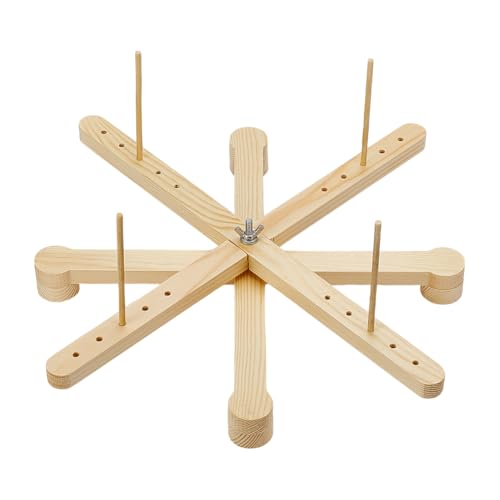
The "Amish style" swift is a rotating wooden frame that holds your yarn in a loop so it can be wound without tangling. Pairing this with a winder is the most efficient way to turn a hank into a cake, as it prevents the yarn from collapsing into a chaotic heap during the process.
The benefit of the wooden Amish style is its adjustability and lack of mechanical parts that can fail. It sits flat on your table, takes up minimal space when disassembled, and can accommodate any size hank from lace to super-bulky.
If you are serious about winding your own yarn, investing in a swift is just as important as the winder itself. Without a swift, you are forced to use the back of a chair or a friend’s hands, which rarely provides the consistent tension required for a clean, tangle-free cake.
Essential Tips for Winding Yarn Without Tangles
- Always use a swift: Never attempt to wind from a hank draped over your knees, as this is a recipe for a "yarn barf" catastrophe.
- Keep the tension light: Let the yarn flow naturally; if you pull it too tight, you will stretch the fiber, which can ruin your gauge later.
- Watch for knots: If you see a factory knot in the hank, stop the winder and decide if you want to cut it out or incorporate it into the cake.
- Start slow: Begin winding at a very slow pace to ensure the yarn is feeding correctly onto the spindle before increasing your speed.
Why Center-Pull Cakes Are Best for Your Knitting
Center-pull cakes are superior because they remain stationary on your table while you knit, preventing the "bouncing ball" effect of a traditional round ball. This stationary position ensures that the yarn is released at a consistent, even tension throughout the entire project.
This consistency is vital for maintaining an even gauge, especially when working with fibers that have little elasticity, like linen or cotton. Because the yarn pulls from the inside, you avoid the frequent tugging and pulling that can lead to uneven stitches or hand fatigue.
Additionally, center-pull cakes make it much easier to work from both ends of the yarn simultaneously if you are doing a project that requires holding two strands together. It is a small change in preparation that yields a significantly more professional result in your finished fabric.
How to Properly Maintain Your Yarn Winder Gears
Even the most expensive winder will eventually seize up if you don’t keep the gears clean and lubricated. Every few months, take a moment to clear out any stray bits of fiber or dust that have migrated into the gear housing.
A tiny drop of sewing machine oil or a silicone-based lubricant applied to the main gear teeth will keep the crank turning smoothly. Avoid using heavy greases, as these tend to attract dust and can eventually create a gummy, abrasive paste that wears down the plastic or metal teeth.
If you hear a grinding noise or feel resistance, stop immediately and inspect the gears for debris. A little bit of preventative maintenance will ensure your winder remains a reliable part of your knitting kit for years to come.
Investing in a quality yarn winding station is one of the best ways to elevate your knitting practice from a hobby to a refined craft. By choosing the right tool for your specific fiber needs and maintaining it properly, you eliminate the friction that often precedes the joy of creation. Remember that the goal is always to protect the integrity of your yarn so that your finished stitches look as beautiful as possible. Happy winding, and may all your cakes be tangle-free!