6 Best Wooden Yarn Spindles For Beginners To Try
Discover the best wooden spindles for beginners. We review six top-rated, durable options designed to make your first spinning experience easy and rewarding.
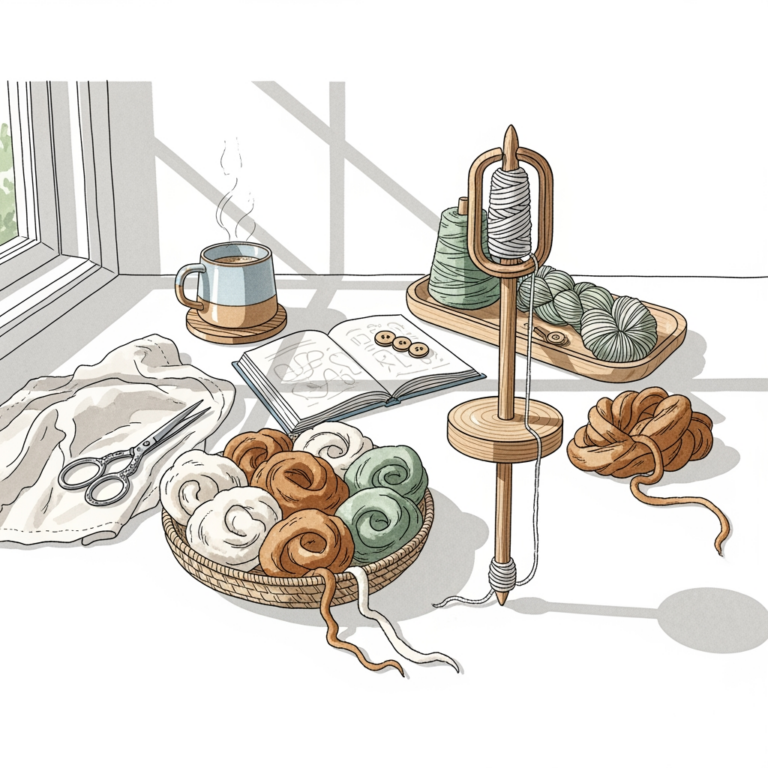
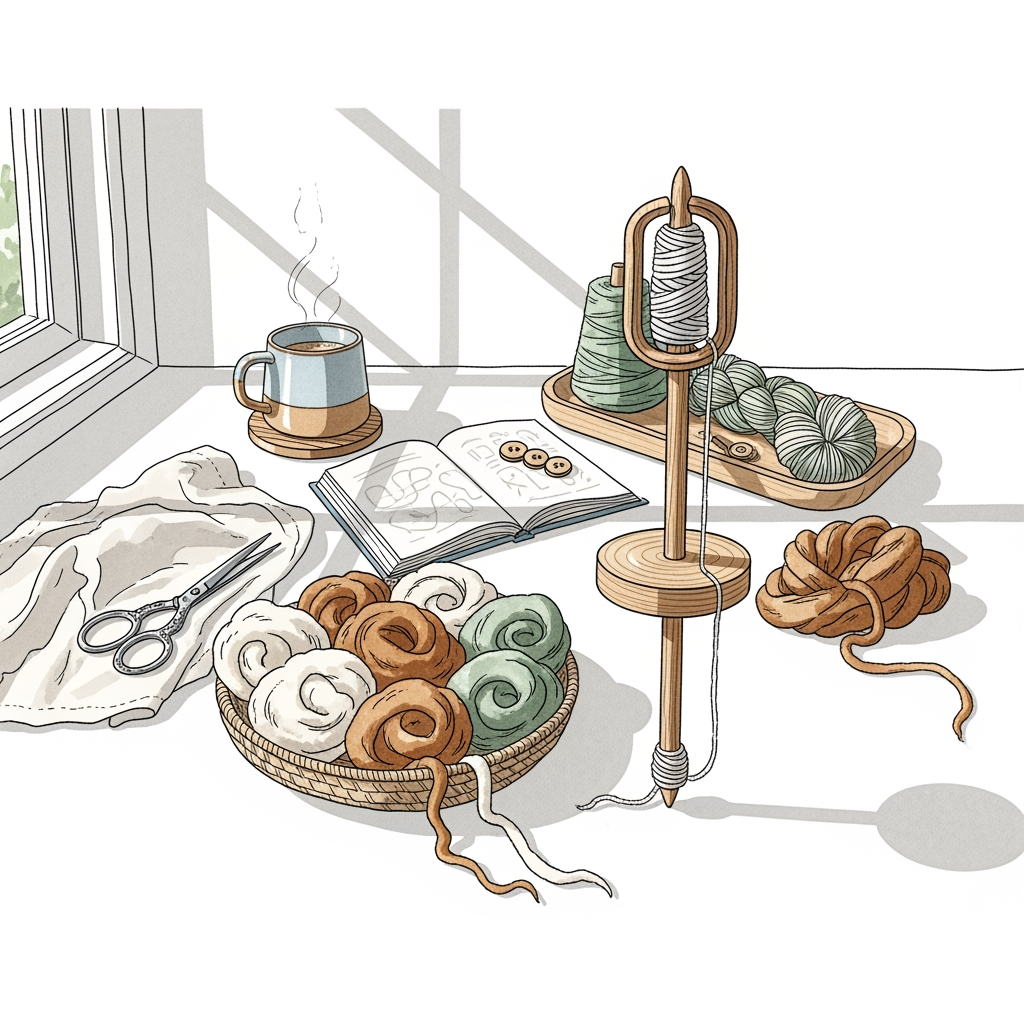
Embarking on the journey of hand-spinning your own yarn is one of the most rewarding transitions a knitter can make. While a spinning wheel is a significant investment, a wooden drop spindle offers an intimate, tactile connection to the fiber that no machine can replicate. Choosing the right tool is the difference between a frustrating tangle and the meditative flow of creating your own custom yarn. These six spindles are curated to help you master the craft with confidence and ease.


Kromski Sonata Student Drop Spindle: Best Overall
The Kromski Sonata is a workhorse that strikes a perfect balance between weight and momentum. It is designed to be forgiving for those who are still developing the "flick" of the wrist required to get a spindle spinning steadily.
Because it features a mid-range weight, it handles a wide variety of fiber preparations, from airy wool rovings to slightly denser top. It doesn’t demand perfect technique, which is exactly what a beginner needs when they are still figuring out how to manage the drafting triangle.
The bottom-whorl design provides the stability necessary for learning the park-and-draft method. If you want one tool that will grow with you from your very first ounce of Corriedale to more complex long-draw spinning, this is your best starting point.
Schacht Hi-Lo Spindle: Best for Quick Spinning

If you find yourself getting impatient with the slow pace of traditional spindles, the Schacht Hi-Lo is your remedy. Its unique design allows the whorl to be moved to either the top or bottom of the shaft, changing the center of gravity instantly.
When the whorl is at the top, it acts like a high-whorl spindle, which is excellent for quick, fast-twisting spins. This is ideal for spinning finer yarns where you need a lot of twist in a short amount of time to keep the fiber from drifting apart.
The tradeoff here is that it requires a bit more hand-eye coordination to keep it balanced. Once you master the momentum, however, you will find it is one of the most efficient tools for producing consistent, thin yarn for fingering-weight projects.
Jenkins Turkish Spindle: Best for Portable Use

The genius of a Turkish spindle lies in its ability to create a center-pull ball of yarn as you spin. This eliminates the need for an extra step of winding your finished singles onto a niddy-noddy or a ball winder.
These spindles are small, lightweight, and incredibly portable, making them perfect for the knitter who wants to spin on the bus or at the park. Because the cross-arms can be removed, the entire tool packs down to the size of a few pencils.
Be aware that because they are so light, they don’t have the heavy "flywheel" effect of a larger drop spindle. You will need to spin more frequently to keep the momentum going, which is a great exercise for building muscle memory in your fingers.
Ashford Student Drop Spindle: Best for Learning
Ashford has spent decades perfecting tools for the classroom, and this spindle is the gold standard for pure simplicity. It is sturdy, reliable, and lacks the bells and whistles that can sometimes distract a beginner from the core mechanics of spinning.
The weight is substantial enough that it won’t stop spinning if you pause for a second to adjust your fiber. For a beginner, that extra "dwell time" is invaluable for correcting mistakes in the twist before they become permanent knots.
It is made from unfinished wood, which provides just enough natural grip for the fiber to cling to the shaft. This prevents the yarn from slipping off unexpectedly, a common annoyance with overly polished or lacquered spindles.
Hansen Mini Spinner: Best for Precision Control
The Hansen Mini Spinner is a precision-engineered tool designed for the spinner who cares about the exact twist-per-inch of their yarn. It is exceptionally balanced, meaning it spins for a long time without wobbling or vibrating in your hand.
This stability is critical when you are working with luxury fibers like silk or fine alpaca. These fibers are slippery and prone to breaking if the twist isn’t perfectly distributed, and the Hansen’s smooth rotation helps you maintain that delicate balance.
While it is a higher-end investment, it is the tool you reach for when you want to produce a high-quality, professional-looking yarn. It is less about "learning" and more about "refining," making it a perfect second spindle once you have mastered the basics.
Golding Student Spindle: Best Heirloom Quality
A Golding spindle is widely considered the "Rolls Royce" of the hand-spinning world. Even their student models are balanced with such extreme care that they feel like an extension of your own hand.
When you invest in a Golding, you are buying a tool that will last for generations. The wood is finished to a glass-like smoothness, which is a joy to handle during long spinning sessions where your hands might otherwise get tired or irritated.
The weight distribution is so precise that you can achieve a very long spin time with a single flick of the wrist. If you are the type of knitter who values craftsmanship and wants a tool that is as beautiful as it is functional, look no further.
Understanding Spindle Weight and Whorl Placement
Spindle weight is the most important factor in determining what kind of yarn you can spin. A heavy spindle (over 2 ounces) is best for thick, bulky, or "art" yarns, while a light spindle (under 1 ounce) is essential for delicate lace-weight threads.
Whorl placement dictates the stability of the spin. A bottom-whorl spindle is generally more stable and easier for beginners to use because it hangs lower and acts like a pendulum.
Top-whorl spindles are faster and more responsive, making them better for spinning "in the air." Most beginners should start with a bottom-whorl spindle to get a feel for the rhythm before moving on to the more agile top-whorl styles.
How to Choose the Right Fiber for Your Spindle
The fiber you choose should match your skill level and the weight of your spindle. For your first attempt, always choose a prepared wool top or roving that has a medium staple length, such as Corriedale or Polwarth.
Avoid slippery fibers like silk, mohair, or angora in the beginning, as they require a level of tension control that takes time to develop. These fibers tend to slide off the spindle or break under uneven tension.
- Corriedale: Excellent for beginners; medium staple length and good "tooth."
- Bluefaced Leicester (BFL): A bit more lustrous and smooth, great for a slightly more advanced beginner.
- Merino: Very soft, but often prone to breaking if you don’t have a light touch.
Essential Tips for Consistent Spinning Tension
Consistency in your spinning comes from the tension you apply to the fiber as you draw it out. If you pull too hard, you will create thin, brittle spots; if you pull too little, the yarn will be thick and under-twisted.
Keep your drafting hand steady and let the spindle do the work of adding the twist. A common mistake is to try to "force" the twist into the fiber with your fingers, which usually leads to uneven yarn.
Instead, create a "drafting triangle" between your two hands. Let the twist travel up from the spindle, stop at your drafting hand, and gently pull the fibers out of the mass. This allows the twist to enter the fiber gradually and evenly.
Troubleshooting Common Beginner Spinning Errors
If your yarn keeps breaking, you are likely drafting too thin before the twist has had a chance to set. Try letting more twist into the fiber before you pull it out, or move your hands closer together to shorten the drafting zone.
If your spindle keeps stopping, you aren’t putting enough "energy" into your spin. Give it a firmer flick, or ensure you aren’t accidentally dragging your fingers against the shaft, which acts like a brake.
Finally, if your yarn looks like a "lumpy" mess, don’t worry—that is just part of the process. Even the most experienced spinners produce "designer" lumpy yarn when they are tired or distracted; just keep spinning, and your muscle memory will eventually smooth it out.
Hand-spinning is a journey of patience, and your choice of spindle is simply the first step in that evolution. Whether you choose a sturdy Ashford or a precision-engineered Golding, remember that the best tool is the one that makes you want to pick up your fiber and spin. Don’t be afraid of the tangles or the uneven bits, as they are the footprints of your learning process. Trust your hands, keep your drafting steady, and enjoy the magical transformation of raw fiber into your own handspun yarn.