6 Best Magnifying Visors For Needle Alignment
Needlework requires precision. We review 6 top magnifying visors, comparing lens clarity, comfort, and lighting to help you achieve perfect needle alignment.
When you are working with dark-colored lace weight yarn or trying to spot a dropped stitch in a complex brioche pattern, your eyes often reach their limit before your hands do. A high-quality magnifying visor can transform a frustrating, squint-filled session into a relaxing evening of rhythmic stitching. These tools aren’t just for those with vision changes; they are essential for anyone performing precision needle alignment on fine-gauge projects. Choosing the right visor means balancing magnification power, weight, and the specific lighting needs of your fiber stash.
OttLite LED Magnifier: Best for Precision Work


The OttLite system is legendary in the craft world for its focus on light quality rather than just sheer magnification. When you are working with dark, matte fibers like black wool or deep navy cotton, standard LEDs can cause glare that obscures your stitches.
This visor excels because it uses high-definition lighting that mimics natural daylight, allowing you to see the true color of your yarn. This is critical when you are performing colorwork or checking for subtle variations in dye lots.
The tradeoff here is the weight, as the integrated lighting system makes it heavier than simple plastic frames. If you are prone to neck strain, you might find this model better suited for shorter, high-intensity sessions like fixing a complex cable cross.
Donegan OptiVISOR: The Professional Standard
If you walk into a high-end watch repair shop or a dental lab, you will see the Donegan OptiVISOR. It is the gold standard for a reason: the glass lenses provide a level of clarity that plastic simply cannot match over long periods.
For the knitter working with metallic threads or slick, slippery silk, the lack of distortion in these lenses is a game-changer. You won’t get that "fish-eye" effect that can lead to headaches when you are trying to align your needles for a delicate kitchener stitch.
Be aware that these are "old school" and do not come with built-in lights. You will likely need to pair this with a high-quality floor lamp, but the trade-off is a durable, professional-grade tool that will last for decades of knitting.
Carson Pro Series: Best Value Head Magnifier

The Carson Pro Series strikes a balance between professional optics and a price point that won’t break your yarn budget. It features an adjustable headband that is surprisingly comfortable for those who wear glasses underneath.
This visor is ideal for the knitter who is just beginning to experiment with magnification but isn’t ready to invest in a top-tier optical system. It handles the basics of needle alignment perfectly, whether you are working with bamboo needles or slick nickel-plated tips.

The main drawback is the plastic lens material, which requires a bit more care to prevent scratching. If you treat it well, it provides an excellent entry point into the world of hands-free magnification.
Fancii LED Head Magnifier: Best Lightweight
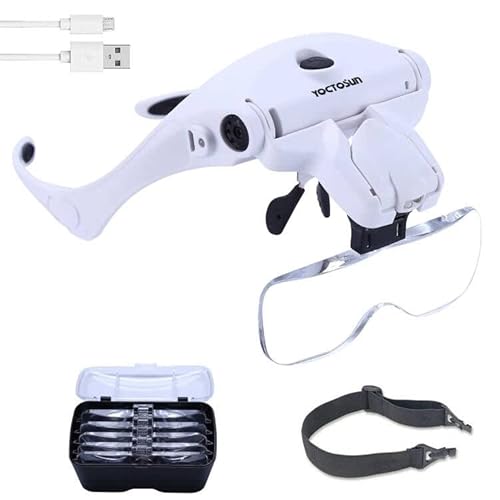
When you are knitting a large-scale project like a sweater, you don’t want a heavy piece of equipment dragging your head down after an hour. The Fancii is designed specifically to disappear on your face, weighing significantly less than its competitors.
The LED lights are positioned to illuminate your work area directly without blinding you or creating distracting shadows on your needles. This is particularly helpful when you are working on intricate lace charts where every stitch placement matters.
Because it is lightweight, the frame is made of thinner materials that may feel less robust than the industrial-style visors. It is the perfect choice for the knitter who values comfort above all else during long, marathon knitting sessions.
Yoctosun Rechargeable Visor: Best Battery Life

There is nothing worse than your magnification dying in the middle of a complex row of lace. The Yoctosun solves this frustration by offering a rechargeable battery that lasts through even the longest knitting weekends.
You won’t have to worry about hunting for spare batteries or dealing with the dimming light that occurs as traditional batteries fade. This consistency helps maintain the same visual clarity from the first stitch of your project to the very last bind-off.
The visor comes with multiple interchangeable lenses, allowing you to swap out magnification levels based on your yarn weight. It is a versatile tool for the knitter who jumps between bulky weight sweaters and fine fingering weight socks.

MagniPros LED Headband: Best Lens Variety
The MagniPros system stands out because it offers a wide range of magnification levels in a single package. This is incredibly useful if your knitting habits involve a mix of different yarn weights and needle sizes.
If you are working with a 2.25mm needle for socks, you can snap in a higher power lens for perfect alignment. When you switch to a bulky weight yarn on 8.0mm needles, you can swap to a lower power lens that offers a wider field of view.
The headband is fully adjustable, which is a big plus if you tend to wear your hair up while knitting. It is a highly adaptable tool that grows with your evolving knitting skills and project preferences.
How to Choose Magnification for Fine Knitting
Choosing the right "diopter" or magnification strength is about finding the sweet spot for your eyes. For most knitters, a 1.5x to 2.5x magnification is sufficient for general needle alignment and stitch counting.
If you are working with very fine fibers like lace-weight mohair or 100% silk, you might be tempted to go higher, but be careful. Higher magnification reduces your field of view, meaning you will have to move your head more to see the whole row.
- 1.5x: Best for general knitting and seeing stitch definition on medium-weight yarns.
- 2.0x: Ideal for fingering weight yarn and identifying dropped stitches.
- 2.5x+: Reserved for extreme detail work, such as fixing errors in complex lace or working with dark, thin fibers.
Why Focal Length Matters for Needle Alignment
Focal length is the distance from your eyes to the work where the image remains in sharp focus. If your visor’s focal length is too short, you will have to hunch over your knitting, leading to severe back and neck pain.
As a rule of thumb, you want a focal length that allows you to maintain a natural, upright posture while holding your needles at a comfortable distance. If you find yourself leaning into the light to get things in focus, your visor is likely not the right fit for your ergonomic needs.
Always test your visor by holding your knitting at your preferred distance before making a final decision. The best visor is one that works with your natural knitting rhythm, not one that forces you to change your posture to accommodate the lens.
Proper Care and Cleaning of Magnifying Lenses
Magnifying lenses are magnets for dust, lint, and the occasional stray bit of wool fiber. Because you are using these while working with yarn, it is vital to keep them clean to avoid blurry spots or light refraction issues.
Never clean your lenses with a paper towel or your sweater, as these can leave tiny scratches on the surface. Instead, use a dedicated microfiber cloth and, if necessary, a gentle lens cleaning solution designed for eyeglasses.
Store your visor in a protective case when it’s not in use to prevent accidental damage. A scratched lens can cause eye strain that negates the very benefits you bought the visor for in the first place.
Adjusting Your Headset for Long Knitting Hours
Even the best visor will become uncomfortable if it is not adjusted to your specific head shape. Take the time to tighten the straps or adjust the headband so that the weight is distributed evenly across your forehead rather than resting solely on your nose.
If you wear glasses, ensure the visor sits comfortably over your frames without pressing them into your temples. A little adjustment time at the start of your project will save you from a major headache three hours into your knitting session.
Consider taking "eye breaks" every 45 minutes, even when using a visor, to let your eyes refocus on distance. Knitting is a marathon, not a sprint, and your tools should support your longevity in the craft, not hinder it.
Finding the right magnifying visor is about matching your specific projects and ergonomic needs to the right optical technology. Whether you prioritize the professional clarity of glass lenses or the lightweight convenience of modern LED-equipped frames, there is a tool that will make your knitting more enjoyable. Remember that the best visor is one that disappears into your routine, letting you focus entirely on the rhythm of your needles and the beauty of your yarn. Happy knitting, and may your stitches always be perfectly aligned.