7 Best Finishing Needles For Delicate Lace Seams
Achieve seamless lace edges with our top 7 finishing needles. Discover the best tools to preserve delicate fibers and ensure professional, invisible results.
Finishing a delicate lace shawl or a fine-gauge silk sweater requires tools that are as gentle as the fibers themselves. Using the wrong needle can split your yarn, snag the delicate halo of mohair, or leave unsightly gaps in your seams. Finding the perfect finishing needle is the difference between a professional heirloom finish and a piece that looks handmade in the wrong way. Here are the top seven needles designed to handle your most precious lace projects with care.
Tulip Tapestry Needles: The Gold Standard Choice
Tulip needles are widely considered the pinnacle of Japanese craftsmanship for a reason. They feature a remarkably smooth surface and a polished eye that prevents yarn abrasion, which is critical when you are weaving in ends on silk or high-twist merino.


The tip is perfectly rounded, neither too blunt to push through fabric nor too sharp to pierce the individual plies of your yarn. When you are working on a piece with a high ply count, these needles slide through the structure of the stitch without causing accidental splits.
While they are a higher investment than basic steel needles, the longevity of the plating makes them a worthwhile staple. If you find your ends are constantly popping out of your lace, the superior quality of a Tulip needle will help you secure them with confidence.
Bohin Bent-Tip Needles for Precision Seaming

If you struggle with the mechanics of mattress stitch, a bent-tip needle is a game-changer. The subtle curve allows you to pick up stitches along a lace edge without having to maneuver your hand at an awkward angle.
This design is particularly helpful when you are seaming a garment that has been blocked to its final dimensions. The curve acts as a guide, letting you "scoop" the stitch loops while keeping the needle flat against the fabric.
Be aware that these are specialized tools; they aren’t meant for every task in your notions bag. However, for complex lace seams where visibility is low and precision is paramount, they provide a level of ergonomic relief that straight needles simply cannot match.
Clover Chibi Darning Needles: Best for Lace

Clover Chibis are a staple in almost every experienced knitter’s kit because they are incredibly reliable and easy to see. The set usually includes a range of sizes, which is vital when you transition from a fingering weight lace to a heavier border.
The material is a flexible, smooth plastic that glides through delicate fibers without catching. Because they are slightly more "grippy" than stainless steel, they hold onto thinner yarns quite well, preventing the needle from sliding out of your hand mid-stitch.
The standout feature is the vibrant color coding, which helps you quickly identify the size you need. For a knitter working on a long-term lace project, having a needle that won’t get lost in the couch cushions is a practical, underrated benefit.
Dritz Finishing Needles: The Budget Pick
Dritz needles are the reliable workhorse of the knitting world. They are widely available, inexpensive, and get the job done without any unnecessary frills or fancy coatings.
If you are a beginner who is prone to losing needles, these are an excellent choice. You get a functional, sturdy tool that handles standard wools and blends perfectly well. They are best suited for projects where you need a straightforward, no-nonsense approach to weaving in ends.
Keep in mind that the finish on these is not as refined as luxury brands. If you are working with extremely delicate, high-end lace—like gossamer-weight cashmere—you might find the surface finish slightly less smooth than a premium needle.
Cocoknits Steel Needles: Durable and Sleek

Cocoknits has mastered the art of the modern knitting tool, and their steel needles are no exception. They are finished with a matte, nylon coating that provides just enough friction to keep your yarn secure while remaining smooth enough to glide through tight lace stitches.
The aesthetic is minimalist and functional, designed to be stored easily in their signature notions tins. They are remarkably durable, resisting the bending and warping that can plague cheaper, thinner steel needles over time.
These are an excellent choice for the knitter who values organization and consistent performance. When you are finishing a complex lace project, having a needle that feels substantial in the hand helps you maintain better tension control during the final weave-in.
ChiaoGoo Stainless Steel Finishing Needles

ChiaoGoo is beloved for their high-quality stainless steel, and their finishing needles carry that same reputation for precision. They are incredibly stiff and strong, which is ideal if you are working with dense lace or need to pull a tail through a tight, stubborn seam.
The eyes are generous, making threading easier even when your eyes are tired after a long knitting session. The tips are sharp enough to navigate complex lace patterns without being dangerous or prone to snagging your work.
If you prefer a needle that feels "fast" and slick, these are the best in class. They are particularly effective for working with superwash wools, which can sometimes be slippery; the steel provides a consistent, reliable path through the fabric.
Pony Aluminum Needles for Delicate Fibers

Pony aluminum needles are lightweight and comfortable for long finishing sessions. The aluminum has a slight warmth to it compared to steel, which can be more comfortable for knitters with sensitive joints.
They are generally very smooth, making them a safe choice for mohair or angora blends where you want to minimize friction. The lightness of the material ensures that you won’t accidentally pull or distort your lace stitches as you weave in your ends.
Because aluminum is a softer metal, they can bend if you accidentally sit on them or keep them in a crowded bag. Treat them with a little extra care, and they will serve as a gentle, reliable partner for your most fragile, airy lace projects.
Why Needle Eye Size Matters for Lace Projects
The eye of the needle is often overlooked, but it is the most critical part of the tool when working with fine yarn. A needle with an eye that is too large will stretch your lace stitches, leaving a permanent gap in your finished work.
Conversely, an eye that is too small will cause your yarn to fray or snap as you force it through. Always match the eye size to the diameter of your yarn; the yarn should slide through the eye with only a tiny amount of resistance.
- For lace-weight yarn: Use a needle with a narrow, streamlined eye.
- For fingering-weight yarn: A medium-sized eye is usually sufficient.
- Avoid: Using a heavy-duty darning needle on fine lace, as it will physically displace the stitches.
Selecting the Best Tip Shape for Fine Seaming
Tip shape determines how well your needle interacts with the structure of your knitting. For lace, a tapered point is generally preferred because it can slide between the fibers of a stitch without splitting the yarn.
If you are working with a very airy, loose lace, a blunt tip is safer because it will naturally push the yarn out of the way rather than piercing it. It is a subtle distinction, but it prevents the "fuzzy" halo of your yarn from getting caught in the seam.
- Sharp tips: Best for tight, dense gauge or picking up stitches in difficult spots.
- Blunt tips: Ideal for weaving ends into delicate, open-work lace.
- Bent tips: Essential for ergonomic seaming along complex edges.
Proper Care and Storage for Your Needle Set
Your needles are precision tools, and they deserve proper storage to maintain their finish. Avoid throwing them loose into a knitting bag, where the tips can become dulled or the needles can bend against heavier items like scissors or metal gauge tools.
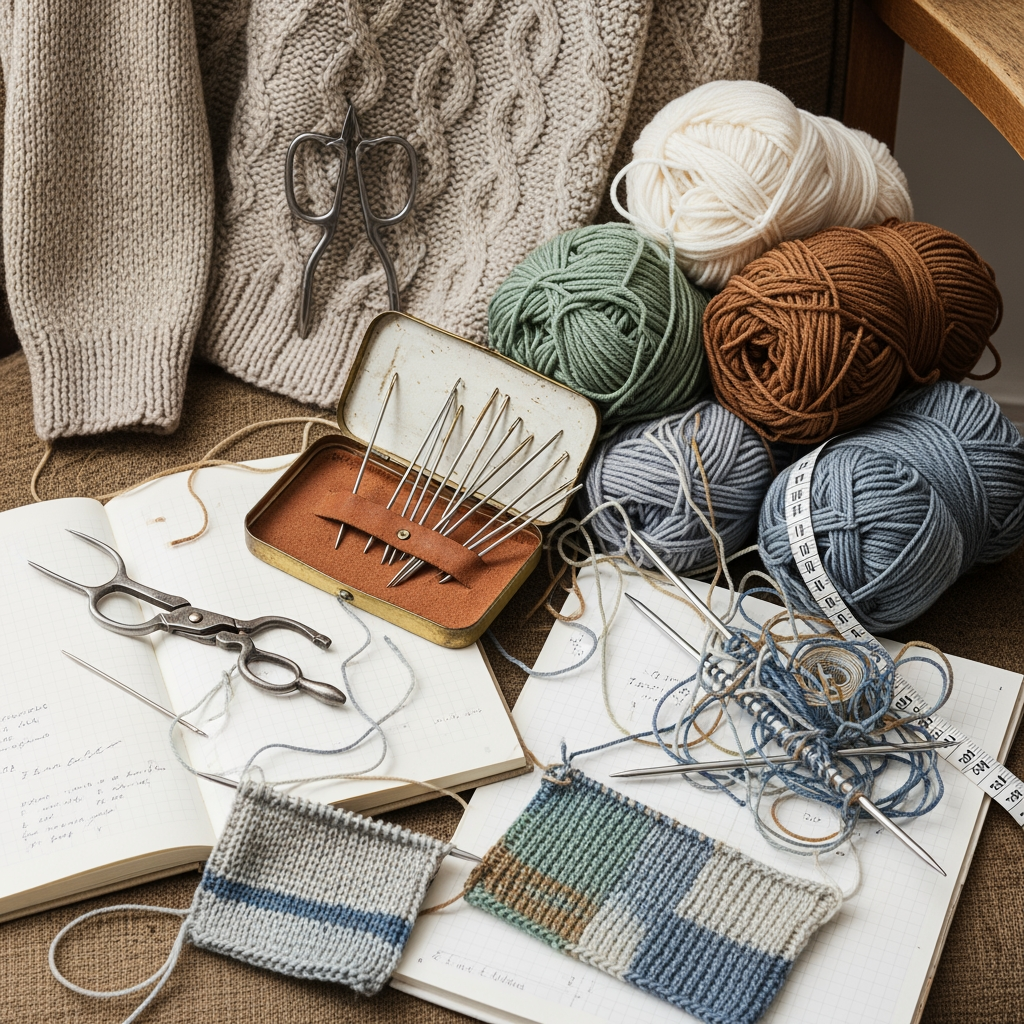
Consider a dedicated needle case with individual slots to keep them organized by size. If you notice a needle has developed a burr or a rough patch, discard it immediately; even a tiny imperfection can snag and ruin a delicate lace project.
Regularly wiping your needles with a soft, lint-free cloth will remove skin oils and debris, keeping them smooth for years to come. Treat your finishing needles with the same care you give your favorite pair of knitting needles, and your lace projects will thank you.
Choosing the right finishing needle is a small but vital step in elevating your lace knitting from a hobby to a craft. Whether you prefer the precision of a bent tip or the slick slide of stainless steel, the best tool is the one that makes your final weave-in feel effortless. Take the time to test a few different styles, and you will soon find the perfect match for your unique knitting style. Happy seaming, and may your ends always be perfectly hidden.