7 Best Loom Knitting Instruction Books for Visual Learners
Master loom knitting with our top seven book picks. These guides offer clear visual instructions, perfect for beginners looking to refine their craft easily.
Loom knitting offers a tactile, rhythmic entry into fiber arts that bypasses the steep learning curve of traditional needle manipulation. For those who process information best through sight, the right manual acts as a bridge between a simple plastic loom and a finished, wearable garment. This guide highlights the best resources for visual learners, ensuring you spend less time guessing and more time creating. Whether you are a total novice or looking to refine your technique, these books provide the clarity needed to master the craft.
Loom Knitting Primer by Isela Phelps: Best Overall
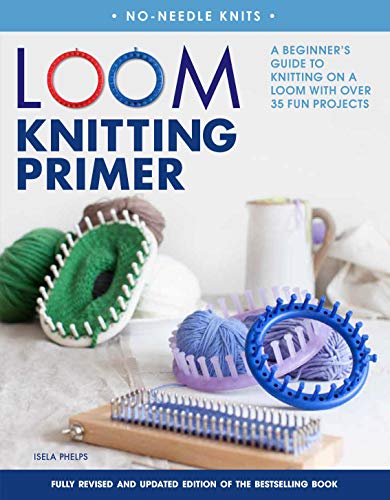

This book is widely considered the "gold standard" for a reason. It breaks down the mechanics of the loom into logical, bite-sized steps that don’t overwhelm the reader.
Phelps excels at explaining how yarn tension affects your final gauge. If you have ever finished a project only to find it looks like a loose, holey mess, this book’s emphasis on consistent wrap tension will be your saving grace.
The photography is clean and high-contrast, which is essential when you are trying to distinguish between a "U-wrap" and an "e-wrap." It serves as a comprehensive foundation for any library.
Learn to Loom Knit for Your Home by Kristen Mangus

Kristen Mangus has a unique ability to translate complex movements into approachable, home-oriented projects. This book is perfect if you want to move beyond simple scarves and into functional decor.
The projects are designed to help you understand how different yarn weights—from worsted to bulky—behave on various loom gauges. Understanding the relationship between your yarn’s WPI (wraps per inch) and the loom’s peg spacing is the secret to professional-looking results.
If you struggle with the "stiffness" often associated with loom-knitted fabric, Mangus provides excellent tips on choosing the right fiber blends. Her focus is on utility, making this a great choice for those who want their knitting to serve a purpose.
Loom Knitting Guide to Hats by Scarlett Royale

Hats are the ultimate "gateway project" for new knitters, but getting the crown decreases right is notoriously tricky. Royale’s guide demystifies the shaping process, which is where most beginners tend to stumble.
The visual diagrams here are particularly helpful for understanding how to move loops to create decreases without dropping stitches. Dropping a stitch in the middle of a hat can be heartbreaking, but this book provides clear "rescue" techniques.
It is a specialized guide, meaning it won’t teach you everything, but it teaches one thing exceptionally well. If you are tired of basic tube hats and want to master a fitted, professional crown, this is your manual.
Loom Knitting Stitches by Kathy Norris Reviewed

Think of this book as a stitch dictionary for the loom. It is less about specific patterns and more about building a repertoire of textures and patterns.
Norris does a fantastic job of showing how to manipulate stitches to create cables and lace-like effects. For a visual learner, seeing the progression of a cable twist on a peg is far more effective than reading a dense paragraph of instructions.
Be aware that these patterns often require a bit more patience and focus. If you are still struggling with your basic knit stitch, save this one for when you’ve gained a bit more confidence.
Loom Knitting Pattern Book by Nicole F. Cox

This collection is a great "next step" for those who have mastered the basics and are feeling bored with simple garter stitch. Cox offers a variety of projects that introduce different shapes and construction methods.
The book is particularly strong at explaining how to join pieces together, a skill many loom knitters neglect. Seamless construction is the goal, but knowing how to properly seam your work is a vital skill for creating garments that actually fit.
The patterns are varied enough that you won’t feel like you are knitting the same thing over and over. It’s an ideal book for building your "knitting confidence" before tackling more complex, custom-fitted designs.
Loom Knitting Socks by Isela Phelps Expert Guide

Socks are the final boss of loom knitting, largely because of the dreaded heel turn. Phelps approaches this with the precision of a master technician, breaking down the short-row heel into manageable visual steps.
If you are using a fine-gauge loom for socks, you’ll appreciate her advice on yarn selection. Avoid heavy, scratchy wools; instead, look for superwash merino blends with a bit of nylon for durability and stretch.
This book is not for the faint of heart, but it is the most reliable path to a well-fitting sock. Take your time, follow the diagrams, and don’t be afraid to rip back if your heel turn doesn’t look quite right the first time.
Loom Knitting Flowers by Lucy Hopping Techniques
Sometimes you just want a quick, satisfying project that uses up your scrap yarn. Hopping’s book is a delightful departure from garments, focusing on whimsical, decorative flowers.
These projects are excellent for practicing tension control without the pressure of needing a perfect fit. They are also a fantastic way to experiment with different fibers, like silk or cotton, which behave very differently than standard acrylics.
For a visual learner, these are essentially 3D puzzles. The diagrams show you exactly how to manipulate the yarn around the pegs to create petals and centers, which is a great exercise in spatial reasoning.
Why Visual Learners Thrive With Loom Knitting Books
Loom knitting is fundamentally a spatial craft. Unlike needle knitting, where the yarn is hidden in the needle tip, the loom displays the yarn clearly on the pegs for you to see.
Visual manuals take advantage of this by using high-resolution photography that captures the exact angle of the yarn. This helps you avoid the common mistake of "over-tightening," which can lead to hand fatigue and distorted fabric.
When you can see the "v" shape of a stitch forming on the peg, you develop an intuitive understanding of the process. This visual feedback loop is what turns a repetitive motion into a creative act.
Key Features to Look for in Loom Knitting Manuals
When shopping for a manual, prioritize books that feature clear, step-by-step photography rather than just written instructions. You want to see the yarn’s path around the peg from the knitter’s perspective.
Look for books that include a "troubleshooting" section. Every knitter drops a stitch eventually; a book that shows you how to pick it back up without unraveling your whole project is worth its weight in gold.
Finally, check if the book discusses gauge swatching. Even on a loom, your tension matters; a book that ignores the importance of a test swatch is doing you a disservice.
How to Master Basic Stitches Using Loom Diagrams
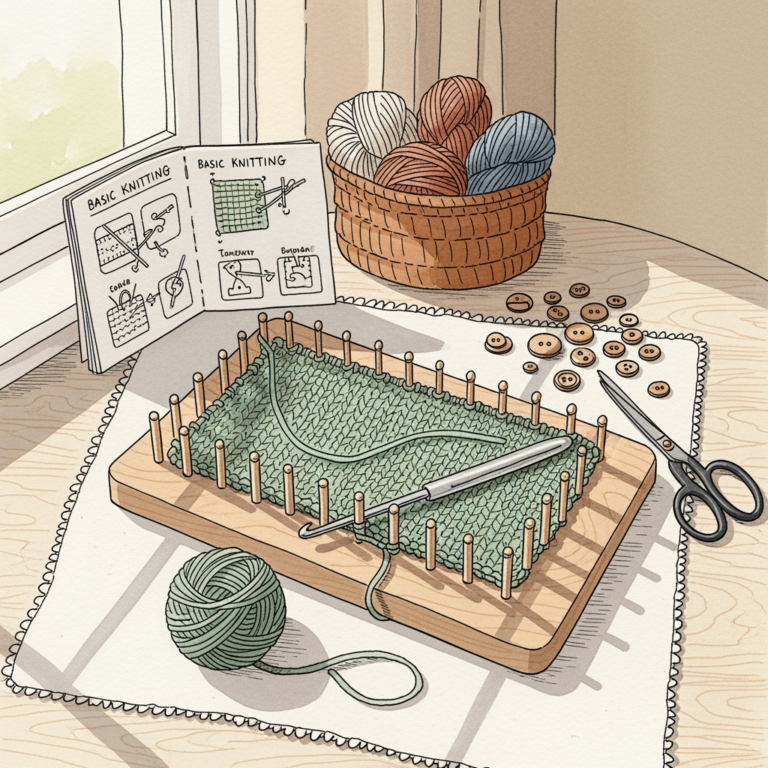
The most important skill you can learn is the "knit stitch" vs. the "purl stitch." Diagrams are your best friend here, as they show the orientation of the yarn loop on the peg.
Start by practicing on a small, scrap piece of yarn. Don’t worry about making a "real" project yet. Focus on the loop-over motion until it becomes muscle memory.
Once you have the basic stitch down, use the diagrams to learn how to identify a "twisted" stitch. A twisted stitch happens when the yarn is wrapped in the wrong direction, and it’s the most common reason a beginner’s fabric looks uneven.
Mastering the loom is a journey of patience, observation, and the right resources. By choosing books that align with your visual learning style, you ensure that every project is a successful building block for your skills. Keep your tension consistent, choose your fibers wisely, and remember that even the most expert knitters once struggled with their first cast-on. Happy knitting, and may your stitches always be even.