6 Archival Pens For Labeling Paper Collections Safely
Preserve your history with the best archival pens for labeling paper collections safely. Read our guide to choose the right acid-free markers for your documents.
When organizing a growing collection of vintage patterns, hand-dyed yarn labels, or historic textile notes, the storage method matters as much as the organization system itself. Standard office pens often contain acidic, unstable dyes that bleed through delicate paper or fade into illegibility after only a few years. Selecting an archival-grade pen ensures that your historical records and project notations remain crisp and clear for decades to come. By prioritizing ink stability and paper compatibility, the preservation of your fiber arts library becomes a permanent investment.
Sakura Pigma Micron: The Archivist’s Gold Standard
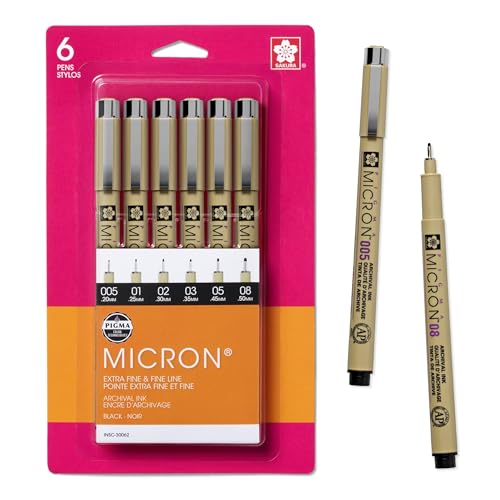

The Sakura Pigma Micron is widely considered the baseline for archival labeling in the fiber arts community. These pens utilize pigment-based ink that sits on top of the paper fibers rather than soaking deep into them, which prevents “feathering” on lower-quality index cards.
Consistency is the hallmark of the Micron. Whether labeling a stack of skein tags or scribbling notes on a project log, the flow remains remarkably uniform. It is a workhorse tool that performs reliably across various paper textures, from slick cardstock to fibrous sketch paper.
The primary limitation is the tip delicacy. If you press too hard during an intense cabling session or when marking gauge swatches, the fine fiber tips can fray. Treat them with a light touch, similar to how you would handle an expensive set of lace needles.
Staedtler Pigment Liner: A Reliable German-Made Pen

Staedtler Pigment Liners offer a level of durability that appeals to knitters who prefer a firmer touch when writing. The tips are engineered to withstand more pressure than many competitors, making them ideal for quick labeling in a busy workspace.
These pens feature a long-lasting, lightfast ink that holds up well against the natural oils in your hands. If your pattern binders are frequently referenced on the workbench, this durability is essential for preventing smudging over time.
They also boast a “dry safe” design, meaning they won’t dry out if left uncapped for a few days during a project deadline. This is a practical advantage for those who often leave their tools scattered while caught up in the rhythm of a complex pattern repeat.
Zig Photo Signature Pen: For Your Most Delicate Items
Not every paper is created equal, and some vintage pattern inserts are far more porous than modern options. The Zig Photo Signature Pen is designed specifically to mark on photographs and high-gloss surfaces without smearing or damaging the delicate coating.
When working with fragile, aged paper, ink absorption can lead to unsightly bleeding that obscures the original text. This pen provides a clean, controlled line that stays exactly where it is placed, ensuring your labels remain readable without ruining the underlying document.
It is an excellent choice for labeling specialized supplies, such as glassine envelopes used to store rare heirloom needles. While it may not be the primary choice for thick cardstock, its gentle ink chemistry makes it a must-have for the sensitive items in a collection.
Copic Multiliner SP: The Pro-Grade Refillable Option
The Copic Multiliner SP represents an investment in the longevity of your labeling tools. Unlike disposable pens that end up in the landfill, this aluminum-bodied pen is designed to be refilled and fitted with replacement nibs as needed.
From an economic and environmental perspective, this is the most sustainable choice for someone with a massive library of patterns to categorize. The ink quality is top-tier, offering a deep, consistent pigment that remains waterproof once it dries.
Because it is a refillable system, you have the flexibility to switch between different tip widths without buying an entirely new pen. It is a high-performance tool, similar in precision to a high-end set of interchangeable circular needles, and requires similar care.
Faber-Castell PITT Pen: Rich, Permanent India Ink
Faber-Castell PITT pens utilize genuine India ink, which is prized by archivists for its incredible lightfastness and water resistance. This ink provides a deep, saturated black tone that stands out clearly against any color of paper or index tab.
Because India ink is pH-neutral, it is the safest choice for long-term storage of irreplaceable fiber records. It will not cause the paper to yellow or brittle over time, even in varying humidity conditions common in craft rooms.
The brush-tip versions are particularly useful for labeling large storage bins or chunky yarn boxes. They offer a level of versatility that fine-liner pens simply cannot match, bridging the gap between professional labeling and artistic notation.
Sharpie Art Pen: Your Trusty, Everyday Archival Pen
The Sharpie Art Pen is the reliable middle ground for knitters who need a durable, no-nonsense tool that is easy to find. It offers a consistent, smear-resistant flow that works perfectly for standard pattern binders and yarn inventory logs.
While not as specialized as an India ink pen, it meets the essential requirements for archival stability. It is the perfect choice for keeping in your knitting bag for on-the-go organization during retreats or local guild meetings.
The ink is quick-drying, which is a major advantage for left-handed knitters or those who tend to move quickly through their notes. It balances performance with convenience, ensuring that organization never feels like a chore.
How to Choose the Right Archival Pen for Your Paper
Selecting the right pen requires a basic understanding of your paper surface. If you are marking on coated or glossy storage labels, a pigment-based pen is non-negotiable to prevent smudging.
For raw, uncoated recycled paper, look for a pen with a thinner ink flow to prevent the dreaded bleed-through. You are essentially matching the viscosity of the ink to the “tooth” of the paper, much like matching the drape of a yarn to the structure of a pattern.
Always consider the environment where the paper will live. If you store your patterns in a damp basement, a waterproof, lightfast ink is mandatory to avoid losing information to accidental moisture exposure.
Pigment vs. Dye Ink: What’s the Key Difference?
Dye inks are essentially colored liquids that sink deep into the paper fibers. They are often vibrant but tend to fade rapidly when exposed to light, making them poor candidates for long-term archival storage.
Pigment inks, by contrast, contain microscopic solid particles that sit on the surface of the paper. They are significantly more resistant to UV light and water, which is why they are the only choice for documents intended to last for decades.
Think of pigment ink as the “hard twist” of the pen world—stable, strong, and built to withstand tension. Dye ink is more like a delicate mohair—beautiful in the moment, but prone to wear and environmental damage if not treated with extreme care.
What Does “Archival Quality” Actually Mean, Anyway?
“Archival quality” is a technical term indicating that a material is acid-free and pH-neutral. These properties prevent the ink from deteriorating the paper through chemical reactions over time.
A true archival pen must also be lightfast, meaning the color remains stable even after years of exposure to ambient light. If the ink fades to gray, the label becomes useless, regardless of how neatly it was written.
When shopping, look for the term “archival” on the packaging, but also check for “waterproof” or “pigment-based” descriptors. These are the indicators that the manufacturer has prioritized substance over simple aesthetics.
Testing Your Pen: A Simple Step to Avoid Disaster
Never apply a new pen to your master pattern collection without testing it first. Take a scrap piece of paper that is similar in weight and texture to your target document and write a few lines.
Let the ink sit for a few minutes, then run a slightly damp finger or cotton swab over the marks. If the ink bleeds or lifts, it is not sufficiently waterproof for your needs and should be retired to general-purpose work.
Testing confirms the pen’s performance under real-world conditions, preventing accidental ruin of your precious fiber history. A five-minute test today is worth far more than the frustration of a ruined, unreadable record years down the line.
By choosing the right tool for the job, you ensure that your records remain as organized and enduring as your most cherished knitted heirlooms. A small amount of preparation now provides the peace of mind that your patterns and notes will survive for generations to come.