6 Best Light Pads For Detailed Canvas Work
Elevate your canvas art with our top 6 light pads for precision and detail. Read our expert reviews to find the perfect lighting tool for your creative studio.
When tackling intricate embroidery or charting lace patterns onto fabric, eye fatigue often becomes the primary obstacle to finishing a project. A quality light pad transforms a dim workspace into a professional-grade environment, allowing for precise needle placement and clear visualization of hidden stitches. These tools go beyond simple illumination, providing the high-contrast backlighting necessary to map out complex beadwork or intricate embroidery designs on dense canvas. Investing in the right light source ensures that hours spent hunched over a frame do not result in strained eyes or misaligned stitches.
Daylight Wafer 2: The Pro-Grade Brightness Pick


The Daylight Wafer 2 stands out because of its exceptional color temperature and consistent, flicker-free light output. For knitters working with dark-colored yarns like midnight blue or black, this consistency is vital for seeing stitch definition and preventing dropped stitches during complex cabling.
This model is fully dimmable, which allows for perfect adjustment based on the ambient light in the room. When the evening light fades, dialing the brightness up ensures that the fine details of a stranded colorwork chart remain crisp and legible.
It remains cool to the touch even after hours of continuous operation. This safety feature is critical when working with synthetic fibers that might otherwise react poorly to prolonged exposure to heat or when placing delicate silk projects directly on the surface.
Artograph LightTracer: Best for Durability

Built with a sturdy, inclined surface, the Artograph LightTracer provides a reliable platform for those who prefer an ergonomic angle while transferring patterns. The gentle slope mimics the position of a drafting table, which helps reduce the neck strain often associated with detailed fabric work.
The housing is constructed to withstand the rigors of a busy studio. It handles the weight of heavy wools or oversized tapestry frames without showing signs of wear or structural sagging.
While it lacks the ultra-thin profile of modern LEDs, its longevity is unmatched in the industry. For the fiber artist who values a tool that will last for a decade, this remains the gold standard.
CraftiLite Pro A3: Top Choice for Large Canvases
When working on full-scale embroidery projects or large-format needlepoint, surface area becomes the most important specification. The CraftiLite Pro A3 offers a wide, expansive workspace that prevents the need to constantly reposition fabric under the light source.
Large canvases often become heavy and difficult to maneuver once beads and heavy threads are added. This pad provides a stable, oversized base that supports the entire weight of the piece, preventing bunching or distortion while tracing designs.
The even illumination across the entire A3 surface eliminates dark spots, ensuring consistent visibility from center to edge. It is the practical choice for anyone producing large-scale wall hangings or intricate, oversized tapestries.
Huion L4S Light Pad: Thinnest & Sleekest Design
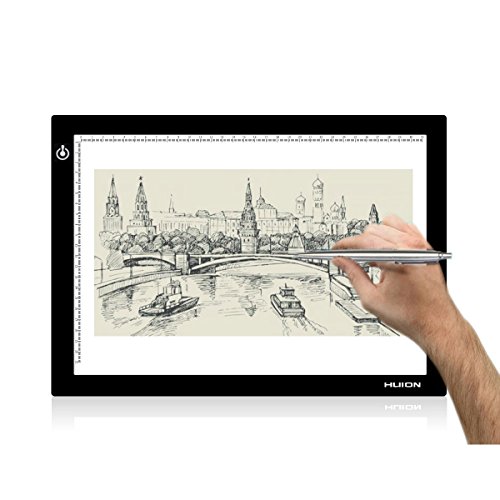
The Huion L4S is remarkably thin, making it effortless to tuck into a project bag alongside circular needles and stitch markers. Its low profile allows it to sit flush with a table surface, minimizing the transition edge between the pad and the workspace.
Because it is so lightweight, it is an excellent companion for travel. Whether working on a train or in a hotel room, this pad provides professional lighting without occupying significant luggage space or adding unnecessary bulk to a mobile crafting kit.
Despite its slim design, the LED intensity is surprisingly powerful. It provides enough punch to shine through heavy-weight cotton fabrics or interfacing, provided the canvas is not overly dense.
LitEnergy A4 Light Box: The Best Budget-Friendly Buy
The LitEnergy A4 is a no-frills, highly effective tool for those who need basic illumination without the premium price tag. It provides a standard, reliable brightness level that is perfect for most daily charting and tracing needs.
While it may not offer the advanced dimming or heat-management features of professional units, it is more than sufficient for standard knitting and embroidery tasks. It serves as an excellent entry point for makers just beginning to explore the benefits of backlit surfaces.
Durability is adequate for light-to-moderate use, though it is best kept in a dedicated spot rather than frequently transported. It is the pragmatic choice for the maker who prefers to invest more of the budget into high-quality wool or luxury silk fibers.
Neatfi-XL Travel Pad: Most Portable for Classes
Portability is the defining feature of the Neatfi-XL, as it is designed specifically for those who take their work to guild meetings or workshops. It slides easily into standard portfolio cases and includes features that protect the screen from scratches during transit.
When attending classes where lighting is unpredictable, having a personal, battery-compatible light source is essential. It ensures that the specific contrast needed for fine-gauge work is always available, regardless of the venue’s setup.
The build quality is resilient enough to handle the occasional bump or drop during travel. It balances weight and utility, making it the most sensible option for the mobile fiber artist.
How to Choose the Right Size for Your Projects
Selecting the right size requires looking at the dimensions of the largest item intended for use. A common mistake is purchasing an A4 pad when a project requires an A3 to see the entire design at once.
If the goal is to map out charts for large sweaters or long tapestry panels, the A3 is non-negotiable. For smaller, individual motif charts or sock-knitting patterns, an A4 or even an A5 size is usually sufficient and easier to store.
Always consider the workspace footprint before buying. A massive light pad can be cumbersome on a cluttered desk, and if it occupies all the space, there will be no room left for yarn balls, scissors, and other essential tools.
Corded vs. Battery-Powered: Which Is Best?
Corded models offer unlimited runtime, which is ideal for long-term projects left permanently on a dedicated craft desk. These units generally provide more stable voltage to the LEDs, preventing flickering during long, multi-hour sessions.
Battery-powered pads offer freedom from wall outlets but necessitate regular charging. For fiber artists who move from the armchair to the kitchen table, the cordless convenience often outweighs the inconvenience of an occasional battery swap.
Assess the typical location of the work. If the project is stationary, stick to a corded model to avoid the battery degradation that inevitably occurs over years of recharging.
Understanding Brightness Levels and Lumens
Brightness is typically measured in lumens, though the perception of brightness is affected by the surface finish of the light pad. A high-lumen count is useless if the acrylic top has a matte finish that diffuses the light too much, potentially making fine lines on a pattern blurry.
For dense fabrics like heavy-duty linen or dark wool, high-lumen output is essential to penetrate the weave. Always look for pads with adjustable brightness, as high settings can quickly become irritating to the eyes during extended night work.
Effective brightness management allows for high contrast when tracing dark lines and soft, diffused light when checking for gauge irregularities. Never assume more is always better, as excessive glare can be just as tiring as insufficient light.
Light Pad vs. Magnifying Lamp: Do You Need Both?
A light pad is designed to illuminate a surface from underneath, primarily for tracing or identifying dark areas of fabric. A magnifying lamp, by contrast, illuminates from above and provides the optical power required to see individual stitches or tiny bead holes clearly.
Many advanced fiber artists use both in tandem. The light pad defines the pattern underneath, while the magnifying lamp provides the focal clarity needed to execute the stitch without damaging the fibers.
If the budget only allows for one, prioritize the tool that solves the biggest frustration. If the problem is tracing patterns, get the light pad; if the problem is eye strain while working on fine-weight yarn, choose the magnifying lamp.
Choosing the right illumination tool depends entirely on whether the primary challenge is visibility of the design or clarity of the stitch. By aligning the features of these light pads with the specific demands of the project, any fiber artist can create a more professional and comfortable studio environment. Investing in the right light source is not merely about convenience; it is a commitment to maintaining long-term ocular health and precision in every project. Whether opting for the pro-grade brightness of a Daylight unit or the portable convenience of a travel-ready pad, a well-lit workspace remains the foundation of excellent craftsmanship.