7 Best Caliper Gauges For Measuring Bead Size
Find the 7 best caliper gauges for measuring bead size with our expert guide. Compare top tools and select the perfect precision instrument for your projects.
Precision is the quiet foundation of every exquisite knitting project, particularly when incorporating beads into lace or colorwork. Knowing the exact millimeter measurement of a bead ensures that it slides effortlessly over the yarn without snagging or damaging the fiber. A reliable set of calipers transforms guesswork into consistent, professional-grade results. Selecting the right measuring tool is an investment that preserves both the integrity of the yarn and the beauty of the final design.
iGaging EZCal Digital Caliper: Best Overall


The iGaging EZCal stands out for its consistent accuracy and high-speed data transmission. For knitters who frequently switch between varying bead sizes for intricate patterns, the immediate digital readout eliminates the eye strain associated with reading fine tick marks. It provides an excellent balance of rugged construction and high-precision measurements.
Its standout feature is the IP54 protection rating, which guards against dust and accidental splashes of water or blocking spray. When working with fine silk or mohair, keep the tool clean to ensure no debris transfers to the delicate fibers. The smooth, effortless slide of the jaw prevents the user from accidentally crushing fragile glass beads.
The bottom line is that the iGaging EZCal offers the most reliable performance for the price. It is a dependable workhorse that belongs on any serious knitter’s project table.
Neiko 01407A Digital Caliper: Best Budget Pick
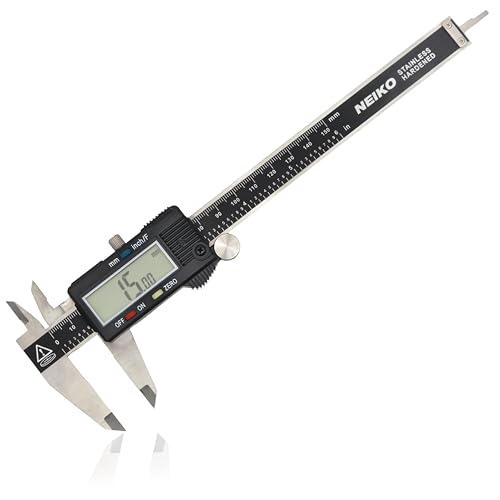
The Neiko 01407A is a practical choice for those who need a functional measuring tool without investing in top-tier workshop equipment. It offers a clear, large-format LCD display that is incredibly easy to read at a glance. For a hobbyist who only occasionally measures beads for a special occasion wrap or shawl, this tool provides sufficient accuracy.
One trade-off with budget digital tools is the battery consumption. It is wise to remove the battery during long periods of storage to prevent corrosion. While it lacks the high-end precision of industrial models, it is more than adequate for identifying standard 6/0, 8/0, or 11/0 bead sizes.
It is a straightforward, no-nonsense tool for the knitter on a budget. It gets the job done without unnecessary frills or a hefty price tag.
Mitutoyo 500-196-30 Caliper: Premium Choice

For those who demand absolute perfection, the Mitutoyo 500-196-30 represents the gold standard. This Japanese-made instrument is built to last a lifetime, featuring an induction-type ABS encoder that remains accurate even in the presence of lint or moisture. In a professional studio setting where consistency is non-negotiable, this is the tool of choice.
The build quality is exceptional, with a hardened stainless steel frame that feels balanced and secure in the hand. Unlike cheaper alternatives, the jaw movement is buttery smooth and resists shifting during measurement. This is vital when measuring expensive gemstone or precious metal beads that require a gentle, consistent touch.
If the budget allows, this is the final caliper you will ever need to purchase. It is an investment in long-term precision for a serious maker.
General Tools Plastic Caliper: For Delicate Beads
Metal jaws can sometimes scratch or chip soft, fragile beads like antique crystals or certain coated varieties. The General Tools plastic caliper offers a non-marring alternative that is gentle on delicate materials. It is lightweight, portable, and completely immune to the risk of rusting.
Because it is made of plastic, it may exhibit slightly more flex than metal versions, so keep the pressure light when clamping the jaws. This tool is perfect for tossing into a travel knitting bag for projects on the go. It ensures that you can verify bead compatibility wherever you happen to be working.
It is the safest option for preserving the finish of high-end or vintage beads. Use it when you want to avoid any risk of surface damage.
SE 782DCG Dial Caliper: Best Non-Digital Option
Many knitters prefer a tactile, mechanical approach to measurement. The SE 782DCG dial caliper provides a satisfying, analog experience that requires no batteries or electronic calibration. The large, easy-to-read dial mimics a clock face, making it intuitive for those who dislike digital interfaces.
Dial calipers are highly durable because they lack sensitive electronic circuitry. However, keep the gear rack clean; a buildup of yarn fuzz or dust can interfere with the dial’s movement. A quick puff of air or a soft brush keeps it performing consistently for years.
This is the best choice for the traditionalist who prefers a mechanical connection to their tools. It offers reliable, battery-free operation that is always ready when inspiration strikes.
VINCA DCLA-0605 Digital Caliper: Most Durable

The VINCA DCLA-0605 is engineered for longevity, featuring a stainless steel frame that withstands the rigors of a busy craft room. It is remarkably robust, making it a favorite for those who handle many tools at once and require something that can handle an occasional bump. It delivers repeatable, high-precision results consistently.
One of its most useful features is the ability to easily toggle between inches and millimeters. When following international patterns that use either system, this conversion is a massive time-saver. The sturdy thumb wheel allows for precise, micro-adjustments when measuring tiny seed beads.
For the knitter who wants a durable, high-quality instrument that survives frequent use, the VINCA is a top contender. It feels solid, substantial, and ready for any project.
Adoric Digital Caliper: Great for Beginners
The Adoric digital caliper is an approachable entry point for those new to measuring beads for their craft. It is simple to operate, with a single button to zero out the measurement and another to toggle between units. For a beginner learning how bead size relates to yarn gauge, this simplicity is a significant advantage.
While it may not match the extreme tolerances of industrial calipers, it is plenty accurate for the needs of 99% of knitting projects. Its compact size makes it easy to stow away in a notions pouch. It provides clear, reliable data that helps beginners gain confidence in their supply choices.
It is a perfect starting tool for any knitter expanding their toolkit to include beads. It bridges the gap between basic guesswork and informed project planning.
How to Choose the Right Caliper for Your Craft
Selecting the right caliper begins with understanding the nature of your projects. If you work primarily with delicate vintage beads or coated finishes, prioritize non-marring plastic models. For those who frequently tackle large-scale bead projects and value speed, a high-quality digital caliper with a large display is essential.
Consider the environment in which you knit as well. If you often take your projects to knitting groups or travel, opt for a durable, stainless steel model that can handle being moved around in a bag. Regardless of the material, always ensure the tool has a lock screw to hold the measurement steady, especially when comparing multiple beads.
Ultimately, the best caliper is the one you will actually use. Prioritize ease of use and reading clarity above advanced features that you do not need.
Digital vs. Dial Calipers: Which Is Best for You?
Digital calipers provide an immediate, error-free numerical output that is ideal for quick, repetitive measurements. They are perfect for knitters who want to check dozens of beads in a single sitting without strain. However, they do rely on batteries, which can be an inconvenience if the tool dies in the middle of a project.
Dial calipers, conversely, offer a beautiful, mechanical reliability that lasts indefinitely without power. They are often preferred by those who enjoy the tactile nature of mechanical tools and appreciate their aesthetic appeal on a workbench. The trade-off is a slightly steeper learning curve for reading the dial face accurately.
Choose digital if you value efficiency and clarity, and choose dial if you value longevity and tactile tradition. Both offer excellent precision for bead sizing.
How to Accurately Measure Beads with a Caliper
To get an accurate measurement, place the bead between the main jaws of the caliper, not the tips. Use the flat surface of the jaws to ensure you are measuring the widest part of the bead. Applying too much pressure can distort the reading, so move the jaws until they just make contact with the bead without squeezing it.
Before taking a measurement, always close the jaws completely and hit the “zero” button on digital models to ensure the device is calibrated correctly. Take measurements of three to five beads from the same batch to account for minor manufacturing variations in bead size. Consistent checking prevents the frustration of a bead being slightly too large for your chosen yarn, which could potentially snap the thread or ruin the drape of your lace.
Taking the time to calibrate before every session is the hallmark of an expert knitter. Precision at the start ensures excellence in the final outcome.
Investing in a quality caliper is a subtle yet significant step in elevating one’s knitting practice. By selecting a tool that aligns with your specific needs—whether for material protection, portability, or sheer mechanical joy—you ensure that your beaded designs remain consistent and professional. Let your choice of measurement tools reflect the care you put into every stitch.