7 Best String Cutters For Maintenance Tools To Use
Upgrade your tool kit with our expert guide to the 7 best string cutters for maintenance. Discover top-rated options and pick the perfect pair for your projects.
Precision in fiber arts begins long before the final stitch is cast off or the ends are woven in. A clean, deliberate cut is the difference between a seamless finish and a fraying edge that threatens the integrity of a project. Whether working with delicate silk lace or robust wool worsted, the right cutting tool minimizes tension distortion and fiber damage. These selections represent the gold standard for maintaining a professional-grade toolkit.
Gingher Stork Scissors: Best for Delicate Trims


Small, pointed scissors are indispensable when dealing with the tight quarters of intricate lace work or precise colorwork floats. The Gingher Stork design provides exceptional visibility, allowing for surgery-like accuracy when trimming tails close to the fabric surface.
These scissors excel where larger shears fail, particularly when cleaning up motifs or clipping stray threads in delicate stranded knitting. Because the blades are ground to a fine point, they slip effortlessly between stitches without snagging neighboring fibers.
Keep in mind that these are precision instruments, not utility shears. Attempting to cut thick yarn tails or multiple strands at once will quickly dull the delicate tips. Treat these as a surgical tool for finishing touches rather than a general-purpose cutter.
Fiskars Thread Snips: Quickest Cuts for Finishing

Speed matters during long sessions of weaving in ends or when managing multiple yarn balls during a complex intarsia project. Thread snips operate on a spring-action mechanism that allows for rapid, one-handed operation.
The primary advantage is the lack of finger loops, which often slow down the transition between knitting and trimming. A simple squeeze is all that is required to make a clean cut, saving seconds that accumulate significantly over the course of a large garment.
These are best kept on a lanyard or directly on the workstation to avoid misplacement during high-intensity knitting sessions. They are ideal for synthetic fibers and standard wools but may struggle with thicker, roving-style yarns that require a heavier blade.
Clover Yarn Cutter Pendant: Safest Travel Option

Traveling with sharp scissors can lead to issues with airport security or accidental stabs in the bottom of a project bag. The Clover Yarn Cutter Pendant functions as a hidden blade inside a decorative, necklace-style housing, ensuring total safety.
Simply guide the yarn into the side slot to slice through it instantly without needing a secondary tool. This is a game-changer for knitters who frequently work on planes or in crowded commute settings where exposed blades are impractical.
Because the blade is shielded, it stays protected from debris and potential damage. While it is perfect for most yarn weights, very fine laceweight yarns might occasionally slip past the gap if not pulled taut against the blade.
Dritz Seam Ripper: Essential for Fixing Mistakes
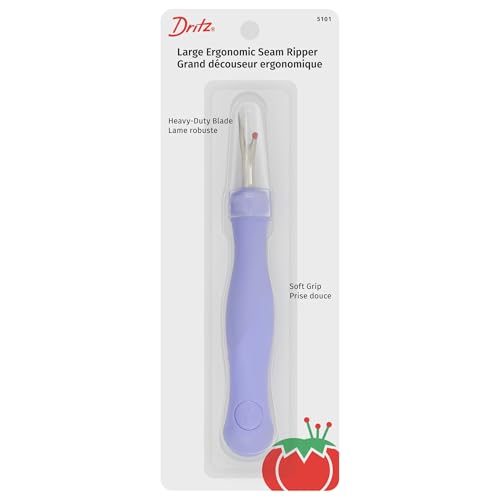
Even the most experienced knitter will eventually face the dreaded dropped stitch or an incorrectly crossed cable. A high-quality seam ripper is the only tool that can surgically remove an errant stitch without damaging the surrounding, healthy fabric.
When choosing a ripper, look for a sharp, fine-gauge blade that allows for easy insertion between plies. The goal is to snap the fiber cleanly rather than tearing it, which preserves the loft and texture of the yarn for potential re-knitting.
Use caution when working with mohair or brushed fibers, as these tend to grab the tip of the tool. Always prioritize a slow, deliberate approach to avoid accidentally cutting the “live” yarn that supports the rest of the work.
Olfa SAC-1 Craft Knife: For Heavy-Duty Cord Cutting
Sometimes a project requires more than just yarn; heavy-duty cord, leather straps for bag handles, or thick twine demand a sturdier solution. The Olfa SAC-1 features a snap-off blade that guarantees a razor-sharp edge at all times.
The slim, stainless steel handle provides a comfortable grip that mimics the feel of a knitting needle, making it intuitive to handle. The precision angle of the blade allows for controlled cutting on a cutting mat, which is essential for uniform results.
Be aware that this tool is exceptionally sharp and should be used exclusively on a self-healing mat to protect work surfaces. It is an investment piece for those who move beyond standard garment knitting into bags, home decor, or structural fiber projects.
Tula Pink EZ Snips: Most Ergonomic for Long Use
Ergonomics often take a backseat in tool design, but repetitive strain is a real concern for knitters. The Tula Pink EZ Snips utilize a unique, comfort-focused geometry that reduces the grip strength required for each cut.
The large finger rings allow for a relaxed hold, preventing the cramping that often occurs with standard, small-handled scissors. This is especially beneficial for knitters who maintain a high volume of projects and spend significant time cleaning up ends.
The blade quality remains high, ensuring that tension is maintained throughout the life of the tool. While the aesthetic is bold, the functional utility for those with arthritis or hand fatigue is undeniable.
Singer ProSeries Snippers: Best Budget-Friendly Pick
Reliability does not always require an expensive price tag. The Singer ProSeries offers a straightforward, durable design that serves as an excellent entry-level or secondary tool for a project bag.
These snippers feature a double-blade action that provides a crisp cut on most standard yarn types. They are compact enough to tuck into a small notions pouch yet sturdy enough to handle daily use without losing alignment.
They serve as a perfect “workhorse” tool. While they may lack the finesse of specialized stork scissors, their consistency makes them a reliable staple for any knitter’s kit.
How to Choose the Right Cutter for Your Project
Selecting the correct tool depends on the fiber composition and the task at hand. Delicate fibers like silk or cashmere require sharp, non-serrated blades to avoid fraying, while hearty, multi-ply wools can tolerate standard snips.
Consider the portability and frequency of use when building your collection. If the knitting happens primarily in a dedicated studio, a pair of high-quality shears is ideal; if the work is portable, prioritize safety-enclosed cutters.
- For high-volume weaving: Choose spring-loaded snips.
- For intricate corrections: Choose a fine-pointed seam ripper.
- For travel: Choose a pendant-style or covered blade.
Sharpening and Maintaining Your Cutting Tools
Dull tools are dangerous, as they require more force and are more prone to slipping during use. Wipe blades clean after every session to remove fiber dust and natural oils that can lead to corrosion.
If a blade begins to tug at the yarn rather than cutting it cleanly, it is time for maintenance. High-quality steel can be professionally sharpened, but many modern tools are designed to have replaceable blades or tips.
Store tools in a dry environment with the blades covered to prevent oxidation. A drop of specialized machine oil on the pivot point once a year will keep the action smooth and prevent the metal from binding.
Safety Tips for Using and Storing Sharp Tools
Sharp tools must be respected, regardless of how small or specialized they may be. Always cut away from the body and keep the blade path clear of the yarn being worked on.
Establish a “tool home” for every item to prevent accidental injuries within a project bag. Never leave loose blades or open scissors on furniture where they might be covered by a blanket or project piece.
- Always store: Blades closed or covered.
- Keep clear: Don’t cut near the working needle tips.
- Check frequently: Inspect tools for loose screws or worn points.
Equipping a knitting station with the proper cutting tools transforms the finishing process from a tedious chore into a seamless part of the craft. By selecting tools that match the specific requirements of the yarn and the task, you protect the integrity of the work and the longevity of the accessories. Consistent maintenance and safety practices ensure that these tools remain reliable companions throughout years of creating.