6 Tweezers With Rubber Tips For Delicate Handling
Handle delicate items with precision using our top 6 picks for tweezers with rubber tips. Find the best tools for your specialized projects and shop today.
Fine-tuned tools are the difference between a frustrating repair and a seamless finish in complex fiber projects. When a stitch drops in a delicate lace shawl or a stray fiber needs to be coaxed back into a luxury yarn, steel tweezers often cause more damage than they solve. Rubber-tipped tweezers offer the gentle precision required to handle high-twist plies and fragile mohair without fraying or snapping the fiber. Investing in a specialized set transforms how minor repairs are managed, ensuring the integrity of the work remains intact.
Beadsmith Soft Tip Tweezers: Best for Beading


These tweezers are specifically engineered for managing small, delicate components that require a non-slip grip. In the world of bead knitting, where glass or crystal beads are integrated into the fabric, they provide the necessary friction to pick up beads without scratching their delicate coatings.
The soft tips act as a cushion, preventing the metal base from catching on fine silk or lace-weight yarns. This is particularly useful when threading beads onto individual stitches, as the rubberized surface prevents the bead from pinging across the room during the process.
While highly effective for beading, the tips are relatively firm compared to other specialty tools. Use these when the primary goal is maintaining a secure hold on hard surfaces rather than delicate manipulation of soft, fuzzy fibers.
SE 841ST Soft-Tip Tweezers: Top Budget Pick
For those building a toolkit on a budget, these offer a functional, entry-level solution for basic fiber tasks. They are sufficient for tasks like tucking in yarn tails or clearing debris from needle grooves without the risk of metal-on-metal scraping.
Because they are a budget option, the rubber tips may eventually show signs of wear if used heavily on abrasive fibers like raw linen or high-twist cotton. They are best suited for light-duty work, such as occasional stitch corrections or snag removal.
Keep these in a notions bag for emergency repairs. They perform well enough for the majority of standard knitting maintenance tasks without requiring a significant investment.
Aven 18070 PVC Tweezers: For Static-Free Work
Static can be a major nuisance when working with synthetic fibers like nylon or acrylic, especially in dry winter climates. These PVC-tipped tweezers are designed to handle sensitive components without creating an electrostatic charge that might attract dust or cause fibers to cling in unwanted ways.
The PVC material provides a unique type of grip that feels different from standard rubber. It has a slight give that conforms to the shape of the object being held, which is ideal for retrieving tiny metal toggles or buttons that have become snagged in a dense cable project.
Consider these when working with high-tech performance yarns or delicate trims. They provide a stable, neutral environment for fiber manipulation, ensuring that unwanted static does not disrupt the tension or placement of the yarn.
Excelta 3C-SA-SE Tweezers: The Precision Choice
When precision is the absolute priority, the Excelta design stands out as a professional-grade option. The tips are meticulously crafted to meet flush, providing a uniform pressure distribution that is essential for handling fine-gauge cashmere or delicate angora.
The construction quality ensures that the tips do not deform under pressure, allowing for consistent performance over time. This reliability is critical when performing “tink-back” operations on lace projects where every stitch must be captured and transferred with surgical accuracy.
The higher price point reflects the engineering behind the tip alignment. For those who spend hundreds of hours on a single heirloom blanket, this level of precision is not a luxury, but a requirement to avoid fiber breakage.
Beadalon Bent Nylon Tweezers: Angled for Control
Bent tips provide a significant ergonomic advantage when working on the surface of a garment. They allow the hand to stay at an angle, providing a clear line of sight to the stitch being repaired without the wrist blocking the view.
The nylon tips are smooth enough to glide over delicate fiber surfaces without snagging. They are particularly effective when working on complex stranded colorwork, where the back of the fabric can be messy with long floats that might otherwise catch on sharper metal tools.
The angle of these tweezers makes them ideal for reaching into tight areas, such as the inside of a sock heel or the crotch of a pair of knit trousers. They provide excellent maneuverability in confined spaces where straight tweezers might be cumbersome.
Xuron 450 TweezerNose Pliers: For Extra Grip
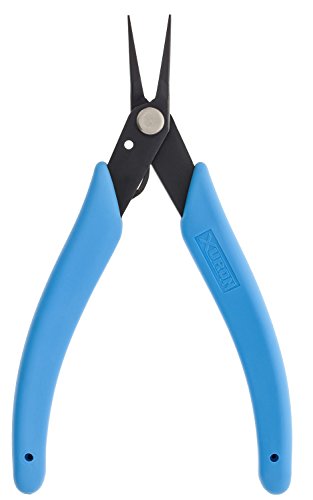
Sometimes a standard tweezer simply lacks the leverage required to pull a stubborn, felted end through a dense junction of stitches. These tools bridge the gap between a pair of tweezers and a set of pliers, offering a more robust gripping force.
The rubberized nose provides a surface that prevents slipping, even when working with slippery silk or bamboo yarns. Because they feature a more substantial handle, they offer greater control when applying the force needed to secure a loose end or pull a knot to the inside of a work.
Use these when the project involves thicker, more durable yarns or when finishing heavy items like felted mittens or wool sweaters. They are not intended for delicate lace, but are a powerhouse for structural repairs.
How to Choose the Right Soft-Tipped Tweezers
The selection process should always begin with the fiber type and the specific nature of the task at hand. If the yarn is delicate, such as a single-ply merino or lace-weight mohair, choose the softest, most pliable tips available to prevent abrasion.
Assess the complexity of the maneuver required before finalizing a purchase. Straight tips excel at precision placement, while bent tips offer the visibility necessary for flat-surface repairs and adjustments in tight spaces.
- Tip Material: Rubber for general grip, PVC for static reduction, nylon for smoothness.
- Handle Ergonomics: Longer handles reduce hand fatigue during intricate work.
- Tip Geometry: Straight for direct access; bent for visibility and ergonomic comfort.
Always prioritize tip alignment. Even the most expensive pair of tweezers will frustrate the user if the tips do not meet perfectly, leading to missed stitches and potential damage to the yarn.
Uses for Soft Tweezers in Knitting & Sewing
Soft-tipped tweezers are essential for correcting errors in intricate cable patterns or lace charts. When a stitch is accidentally dropped or a yarn-over is missed, these tools allow for the careful “laddering up” of stitches without damaging the surrounding, delicate plies of the yarn.
Beyond repairs, they serve as an excellent aid for threading needles or pulling small, slippery ends of yarn through a darning needle’s eye. They are also indispensable for applying tiny buttons, charms, or beads to finished items without damaging the fabric underneath.
For sewing and garment assembly, they prove useful in holding bias tape or small fabric pieces in place while pinning or basting. They are the ultimate “extra set of fingers” for tasks that are too small for human digits but too delicate for steel pliers.
Caring For and Cleaning Your Tweezer Tips
Rubber and nylon tips are susceptible to oils, lint, and dust, all of which reduce their gripping ability over time. Clean them regularly with a damp, lint-free cloth to remove residue, ensuring the grip remains tacky and effective.
Avoid using harsh solvents, as these can degrade the rubber or PVC material, causing it to become brittle or sticky. If the tips do become sticky, a quick wipe with a mild soap solution is usually enough to restore their performance.
Store tweezers in a protective case to prevent the tips from becoming nicked or deformed. Even a minor indentation in the rubber can compromise the precision of the tool, so keep them away from heavier metal objects in the project bag.
Straight vs. Bent Tips: Which Do You Need?
Straight tips offer the most direct path for insertion, making them superior for tasks like threading needles or precisely placing small items into stitches. They provide a direct line of force, which can be useful when you need to pull a yarn end straight through a dense fabric.
Bent tips, conversely, are designed for tasks that require a clear view of the work surface. By angling the handle away from the point of contact, they prevent the hand from obscuring the area being manipulated, which is a major advantage during complex knitting repairs.
Most fiber artists eventually find that a collection requires both. Keep a straight-tipped pair for general maintenance and a bent-tipped pair for those moments when the work requires a more nuanced approach to visibility and ergonomics.
Selecting the right soft-tipped tweezers is an investment in the longevity and professional appearance of your finished projects. By matching the tip material and geometry to the specific needs of your yarn and technique, you ensure that every repair and modification is handled with the care your labor deserves. With the right tool in your notions kit, you can approach even the most complex patterns with confidence.