6 Best Precision Calipers For Measuring Jewelry Findings
Find the 6 best precision calipers for measuring jewelry findings with our expert guide. Compare top tools to ensure accurate measurements for your next project.
Precision measuring is as critical to the fiber artist as it is to the jeweler. Whether confirming the exact diameter of a vintage needle, verifying the thickness of a hand-spun yarn, or sizing findings for complex metal-and-fiber jewelry, a reliable caliper is indispensable. This guide explores the tools that transform guesswork into exacting craftsmanship. Selecting the right instrument ensures that every measurement—from fine wire gauge to structural hardware—is consistent and accurate.
Mitutoyo 500-196-30: The Professional’s Choice


Mitutoyo is the gold standard for those who treat their craft with industrial-grade seriousness. This tool features a hardened stainless steel construction that stands up to decades of bench work without losing its calibration.
If the goal is absolute, repeatable accuracy for custom jewelry findings, this is the definitive investment. The digital display is exceptionally clear, and the sensor system remains stable even in environments with varying temperatures.
While the price point is steep for a casual hobbyist, it is a “buy-it-once” tool. For the professional designer crafting high-end metalwork, the peace of mind regarding tolerance is worth every penny.
iGaging EZ-Cal: Best All-Around Digital Caliper

The iGaging EZ-Cal strikes an impressive balance between high-end precision and accessibility. It utilizes an IP54-rated housing, meaning it resists dust and splashes—a vital feature if the workbench is frequently covered in lint, fiber debris, or polishing compounds.
It features an absolute encoder that keeps track of the zero position even if the power is cycled. This eliminates the frustration of constant re-calibration, much like how a reliable circular needle cable saves time during a long lace project.
This caliper is the workhorse for the serious crafter who values efficiency. It handles measurements for both delicate jewelry components and thicker hardware with equal grace.
Neiko 01407A: Top Pick for an Entry-Level Tool
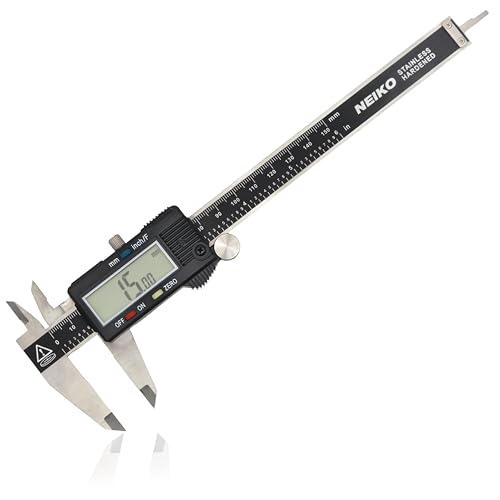
The Neiko 01407A is a reliable starting point for those just beginning to integrate metal findings into their fiber projects. It provides a straightforward digital interface that is easy to navigate, even for those who prefer working with their hands over studying manuals.
Because it offers an accurate enough readout for most common jewelry tasks, it avoids the “sticker shock” associated with higher-tier industrial tools. The stainless steel body feels substantial and resists the wear and tear of a busy craft room.
While it lacks the sophisticated sensor technology of professional-grade models, it is perfectly adequate for measuring wire diameter or checking the hole size of decorative beads. It is a solid choice for the maker whose primary focus remains on the fiber itself.
Vinca DCLA-0605: Best Value for Everyday Crafters

Vinca offers a compelling middle ground, providing NIST-traceable calibration that rivals more expensive units. It is designed to survive the rigors of frequent use, making it ideal for the maker who is constantly checking specs.
The tool features a large, easy-to-read screen, which is helpful when hands are tired from detailed assembly work. Its accuracy is consistent, ensuring that when two clasps need to match perfectly, they actually do.
If the workbench is a place of constant creation and iteration, the Vinca provides the necessary precision without breaking the budget. It represents the sweet spot for those who demand reliability but are mindful of costs.
Kynup Digital Caliper: Great for Casual Hobbyists

The Kynup Digital Caliper is built for the maker who needs occasional measurements rather than constant industrial-grade data. It is lightweight, intuitive, and gets the job done without unnecessary complexity.
It is particularly useful for measuring the diameter of beads or findings when planning a new necklace or accessory. While the materials are not as rugged as a Mitutoyo, they are more than sufficient for gentle, indoor use.
This tool is perfect for the hobbyist who wants to ensure their components fit together correctly but doesn’t need to track tolerances to the thousandth of an inch. Keep it stored in its protective case to ensure it remains reliable for years to come.
Starrett 120A-6: The Best Analog Dial Caliper
For those who find digital batteries unreliable or prefer the tactile feedback of a physical gear, the Starrett 120A-6 is unrivaled. It is a classic, precision-engineered instrument that requires no power source.
Analog dials offer a visual representation of the measurement that some find more intuitive than a rapidly changing digital readout. The construction is heavy-duty, reflecting a tradition of quality that is rare in today’s plastic-heavy market.
This is a tool for the purist who appreciates the mechanical beauty of their equipment. It is excellent for measuring fine jewelry findings where a precise “feel” is required to prevent over-tightening or damaging delicate components.
Digital vs. Dial Calipers: Which Is Right for You?
Digital calipers are generally easier to use, offering a direct numerical output that reduces human error during reading. They are ideal for beginners or those working in dim lighting conditions where reading a fine dial scale could be difficult.
Dial calipers, conversely, are favored by those who want a tool that is immune to battery failure and electromagnetic interference. They require the user to have a basic understanding of how to read the needle against the scale.
Ultimately, the choice comes down to personal comfort and the complexity of the project. If speed and ease of use are the priorities, go digital. If the desire is for a timeless tool that functions without electronics, choose the dial.
Key Caliper Features for Accurate Jewelry Measuring
- Resolution: Look for a device that measures to at least 0.01mm or 0.0005 inches to ensure jewelry findings are accurately sized.
- Depth Rod: Ensure the caliper has a sturdy depth rod to reach into the center of hollow findings or beads.
- Hardened Steel: Avoid plastic construction, as it will flex and warp, leading to inaccurate results.
- Zeroing Capability: The ability to “zero out” the device at any position allows for comparative measurements, which is helpful when checking if two findings are identical in size.
How to Properly Read and Care for Your Calipers
To read a caliper correctly, ensure the jaws are clean of debris before measuring, as even a tiny speck of fiber dust can alter the result. Close the jaws completely and press the zero button to establish a baseline before every session.
Care for the tool by storing it in its original case to protect the delicate jaws from being knocked out of alignment. Avoid dropping them at all costs, as any impact can permanently distort the calibration.
Wipe the tool down with a dry, lint-free cloth after every use to remove oils and polishing compounds. Never force the jaws shut; a light touch is sufficient to get an accurate reading.
Why Material Matters: Stainless Steel vs. Plastic
Stainless steel is the industry standard for a reason; it does not flex or compress under the pressure of the measuring thumbwheel. This rigidity is essential for consistent results when working with rigid metal findings.
Plastic calipers are often sold as affordable alternatives, but they suffer from “give,” where the material bends slightly during use. Inaccurate measurements at this stage lead to poor fitment in finished pieces, much like gauge inconsistencies ruin the shape of a sweater.
Always prioritize stainless steel if accuracy is a project requirement. The slight increase in initial cost pays for itself in the quality and longevity of the finished jewelry.
Whether selecting a professional-grade steel tool or a reliable entry-level model, the right caliper is a foundational asset for any maker. By choosing based on specific project needs and maintenance habits, the quality of every finding will be verified with total confidence.