6 Best Handheld Fabric Steamers For Delicate Knitwear Maintenance
Keep your delicate knitwear looking brand new with our top 6 handheld fabric steamers. Explore our expert-tested picks and refresh your favorite sweaters today.
The final stitch has been cast off, the ends are woven in, and the garment is ready for its final transformation. While wet blocking remains the gold standard for reshaping, a handheld steamer offers a gentle, efficient way to refresh knitwear and tame stubborn, rolled edges between washings. Selecting the right tool requires balancing steam intensity with the delicate nature of fiber memory and loft. This guide evaluates six top-tier steamers to help you preserve the integrity of your hard-earned knitwear.
Conair Turbo ExtremeSteam: Best for Power and Speed


High-output steam is essential when dealing with thick, felted wools or heavy cabled sweaters that need a quick spruce. This model delivers a concentrated flow that penetrates dense stitch patterns without the need for multiple passes.
Because this unit operates with significant heat, it is best suited for hearty, non-superwash wools or sturdy cotton blends. If the goal is to smooth out a stubborn hem or revive a sweater that has been sitting in storage, the high-pressure output saves significant time.
The trade-off for this power is the risk of over-steaming delicate filaments like silk or mohair. Use this tool from a distance of at least six inches to ensure the fibers bloom rather than flatten or singe.
Jiffy Esteam Handheld Steamer: Pro’s Choice

The Jiffy Esteam is widely regarded in the textile industry for its reliability and consistent steam quality. Unlike models that rely on pressurized pulses, this steamer offers a steady, gentle flow that mimics professional garment shop tools.
For those who regularly maintain heirloom-quality knits or complex lace shawls, this consistency is vital. It eliminates the “spitting” of water droplets that can cause uneven saturation or staining on light-colored wools.
While the footprint is larger than travel-sized options, the build quality justifies the space it occupies in your utility closet. It is a long-term investment for a knitter who treats fabric maintenance as a core part of the creative process.
Electrolux Portable: Gentlest for Lace & Cashmere
Delicate fibers like cashmere, angora, and fine silk lace require a softer touch to avoid damaging the delicate halo of the yarn. The Electrolux Portable excels here by providing a diffused, low-velocity steam that won’t distort intricate stitch patterns or weigh down light fibers.
If a project features openwork, such as a complicated yarn-over pattern, this steamer helps the lace breathe without pulling the fabric out of alignment. It operates with just enough warmth to relax the fiber, allowing the stitch definition to pop beautifully.
This is not the tool for heavy, structured wool coats. Instead, reserve it for your most precious, soft-touch garments that require a refined, gentle approach to wrinkle removal.
PurSteam Elite: Best for Steaming Multiple Knits
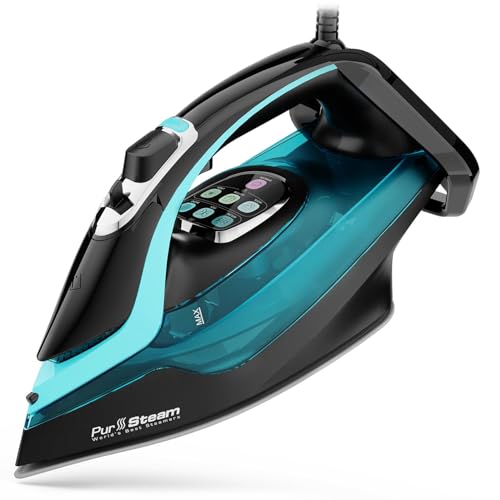
Efficiency is often the deciding factor when clearing out a project basket containing several finished items. The PurSteam Elite features a generous water reservoir, allowing for extended use without the constant need for refills.
This is an ideal choice for the knitter who routinely blocks multiple swatches or completes seasonal garment rotations. The uniform steam distribution ensures that each item receives the same level of care, from the first sleeve to the last collar.
Keep in mind that with larger capacity comes a bit more weight in the hand. Ensure the garment is hung securely or laid flat on a professional blocking mat before starting to maintain control during longer steaming sessions.
Black+Decker Advanced: Best Compact Travel Steamer
A travel steamer must be reliable enough to handle a last-minute wardrobe refresh without occupying precious space in a project bag or suitcase. This model offers a balance of portability and enough heat to handle the wrinkles that inevitably form during travel.
It is particularly useful for maintaining garments made from resilient fibers like nylon-blended wools. Because it is compact, it feels more ergonomic for maneuvering around tricky areas like underarms or decorative buttons.
While it lacks the heavy-duty power of larger units, its convenience makes it a staple for knitter-travelers. It serves perfectly for quick touch-ups on a finished garment before a fiber arts retreat or a craft fair display.
Beautural 1200W: Best Budget Quick Touch-Ups

For the knitter who primarily needs a tool for occasional maintenance or to freshen up a garment before heading out, the Beautural 1200W offers excellent value. It heats up rapidly, making it perfect for those moments when a quick fix is needed on a cold morning.
The heat-up speed is a significant advantage for knitters who find the prospect of an elaborate blocking setup daunting for minor wrinkles. It allows for a simplified workflow without requiring a dedicated workspace or professional equipment.
Be mindful that the steam control is less sophisticated than high-end models. Use short, controlled bursts rather than a continuous stream to keep the moisture levels manageable for the specific yarn content.
How to Steam Knitwear Without Stretching It Out
The most common mistake when steaming knits is allowing the weight of the water to pull the fabric out of shape. Never pull on the garment while it is damp with steam; the fibers are at their most vulnerable state when warm and moist.
- Support the weight: Keep the garment pinned to a blocking board or use a specialized knitting hanger that supports the shoulders.
- Maintain distance: Keep the steamer nozzle a few inches away from the surface to prevent the heat from “killing” the yarn, especially with acrylics or delicate animal fibers.
- The “hover” method: Move the steamer in slow, steady sweeps rather than focusing on a single spot, which can over-saturate and distort the stitch geometry.
Always allow the garment to sit undisturbed for at least an hour after steaming. This “setting” period is crucial for the fibers to cool and lock back into their intended dimensions.
What to Look For in a Steamer for Delicate Fibers
When choosing a steamer, prioritize models that offer adjustable temperature or steam settings. Not all yarns react to heat in the same way; superwash wool, for instance, can lose its structural integrity if blasted with high-temperature, high-pressure steam.
Consider the ergonomics of the water tank. A clear, removable tank allows you to monitor the water level easily, preventing the unit from running dry—a common cause of hardware failure.
Finally, look for a steamer that includes a brush or a fabric attachment. These are essential for lifting the nap on fuzzy yarns like mohair or brushed alpaca, helping them maintain their loft rather than matting down.
Steaming vs. Wet Blocking: When to Use Each Method
Wet blocking involves soaking the garment completely and drying it to specific measurements, which is the only way to fundamentally change a garment’s size or shape. Use wet blocking after finishing a project to equalize gauge and set the final fit.
Steaming is a maintenance tool, not a construction tool. It is best used for: * Refreshing the halo of mohair or alpaca. * Removing wrinkles from storage. * Taming edges that have curled after light wear.
Do not attempt to change the gauge or size of a sweater using only a steamer. If a garment does not fit, it must be washed and re-blocked according to its fiber requirements.
Can You Steam Acrylic and Other Synthetic Yarns?
Steaming synthetic yarns requires extreme caution because these fibers are essentially plastic. While they can be steamed to release wrinkles, they are highly susceptible to “heat-killing,” a process where the fiber permanently loses its crimp and becomes limp and shiny.
- Use low heat: Never hold the steamer close to acrylic, polyester, or nylon blends.
- Test first: Always perform a test on a spare swatch before approaching the finished garment.
- Avoid over-steaming: A quick, light pass is sufficient; do not saturate the fabric.
If the fabric begins to look unnaturally shiny or feels thin and flat, stop immediately. Synthetic fibers have less heat tolerance than natural protein fibers, and damage caused by heat is rarely reversible.
Properly maintaining your knitwear is as much an art as the knitting itself. By selecting the right steamer and utilizing the correct technique for your specific fiber blend, you ensure your work stays beautiful for years to come.