
7 Best Swift Tools For Yarn Management To Try
Boost your Swift development efficiency with these 7 top-tier yarn management tools. Discover how to streamline dependencies and optimize your workflow today.
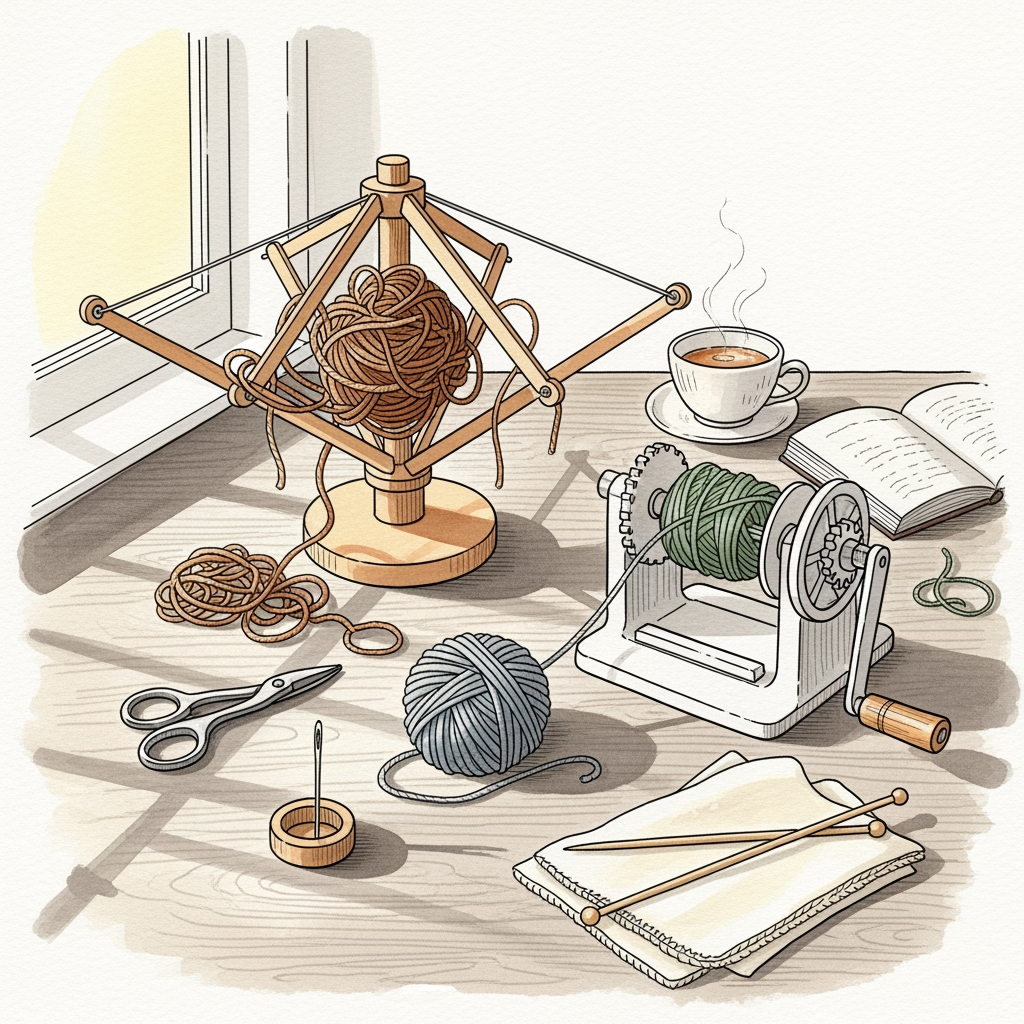
Transforming a tangled, hand-dyed skein into a neat, ready-to-knit cake is one of the most satisfying rituals in fiber arts. A quality yarn swift acts as your extra set of hands, preventing the dreaded "yarn barf" that stalls even the most seasoned knitter. Choosing the right tool depends on your project volume, storage space, and the specific fibers you gravitate toward. Here are seven reliable options to help you streamline your preparation and get straight to the knitting.
Stanwood Needlecraft Tabletop Yarn Swift


This tabletop model is a favorite for knitters who lack a dedicated craft room but still want professional-grade stability. Its compact design allows it to clamp securely to almost any dining table or desk, providing a steady rotation that won’t wobble as you wind.
Because it is made from solid wood, it offers a smooth, friction-free experience that is essential when handling delicate fibers like silk or mohair blends. You won’t have to worry about snags catching on the arms, which is a common frustration with cheaper, mass-produced plastic alternatives.
The real advantage here is the portability and quick setup. If you are someone who knits in the living room one day and the kitchen the next, this swift collapses easily for storage. It is an ideal middle-ground choice for those who want durability without committing to a permanent fixture in their home.
Amish Style Wooden Yarn Swift by Lacis

The Amish-style swift is a classic for a reason: it relies on a simple, gravity-based mechanism that avoids the mechanical tension issues found in umbrella-style tools. Instead of unfolding like a fan, the arms are held together by wooden pegs, allowing you to adjust the diameter to fit any size skein.
This design is incredibly robust, often lasting for decades with minimal maintenance. It is particularly effective for those who work with heavy, bulky wools that might otherwise put too much stress on the delicate plastic components of lighter swifts.
However, note that it requires a bit more floor or table space than the umbrella style. If your workspace is tight, you might find the "legs" of the Amish swift a bit cumbersome. Choose this if you prioritize longevity and simplicity over a compact footprint.
Knit Picks Yarn Swift: Best Value Choice
For the knitter who is just beginning to transition from store-bought balls to hand-dyed skeins, the Knit Picks swift offers the perfect entry point. It is an umbrella-style swift that balances affordability with functional, smooth operation.
It is lightweight and easy to maneuver, making it a great choice for those who only wind yarn occasionally. While it might not have the heavy-duty construction of professional studio equipment, it does exactly what it needs to do without breaking the bank.
Keep in mind that with more affordable plastic and metal components, you should be mindful of how tightly you pack your skeins. Always ensure your skein is properly untwisted before placing it on the swift to avoid unnecessary tension on the frame. It is a fantastic tool for the price, provided you treat it with a bit of care.
Strauch Jumbo Ball Winder and Swift Set

If you are a serious knitter who buys large, 400-gram cones or massive skeins for sweater projects, the Strauch set is the gold standard. This setup is designed to handle significant weight and volume without buckling or skipping.
The engineering here is superior, featuring high-quality bearings that allow the swift to spin with almost zero resistance. This is crucial when winding expensive, high-twist yarns where inconsistent tension during the winding process could lead to uneven gauge later in your project.
While it represents a significant financial investment, it is an investment in your sanity. If you regularly knit garments that require multiple skeins of the same dye lot, the efficiency and reliability of this system will save you hours of frustration.
Royal Wooden Umbrella Swift for Skeins

The Royal wooden umbrella swift is a staple in many local yarn shops due to its elegant, functional design. It features a traditional umbrella mechanism that opens and closes smoothly, making it very easy to adjust to the specific circumference of your yarn.
The smooth finish of the wood ensures that even the most delicate lace-weight yarns won’t snag or pull. It feels substantial in the hand, and the clamping mechanism is generally very secure, preventing the swift from sliding off the table during a high-speed wind.
This is a great "workhorse" tool for the intermediate knitter. It bridges the gap between budget options and professional studio gear. If you appreciate a tool that is as beautiful as it is functional, this is a top-tier choice.
Nancy’s Knit Knacks Heavy Duty Swift
This swift is designed for the knitter who demands precision and durability. Nancy’s Knit Knacks is known for creating tools that account for the physical realities of fiber arts, and their heavy-duty swift is no exception.
The build quality is exceptional, featuring hardware that is designed to withstand daily use. It is particularly well-suited for those who wind a lot of yarn, such as knitters who prepare kits for classes or those who sell their own hand-spun yarns.
The primary benefit is the consistent tension control. When you are winding a lot of yardage, you need a swift that doesn’t drag or stutter. This tool provides a consistent, fluid motion that results in perfectly wound yarn cakes every time.

Skein-Winder Wooden Swift for Projects
The Skein-Winder is a versatile tool that often appeals to those who do more than just wind yarn. It is designed to be sturdy and reliable, acting as a centerpiece for your yarn preparation station.
It is particularly effective for those who work with varying skein sizes, from small 50g lace hanks to large 200g worsted skeins. The adjustable arms are easy to manipulate, and the wood construction is solid and dependable.
If you are looking for a reliable, no-nonsense tool that will handle your stash with ease, this is a solid contender. It isn’t the flashiest option on the market, but it is remarkably consistent. It’s a tool that respects the time and effort you’ve put into selecting your materials.
How to Properly Setup Your Yarn Swift Tool
Setting up your swift correctly is the difference between a smooth winding experience and a tangled disaster. First, ensure your swift is clamped firmly to a level surface; a wobbly base will cause the yarn to jump off the arms.
Before placing your skein, inspect the twist. A skein is essentially a large loop of yarn that has been twisted into a figure-eight; you must untwist it completely into a large circle before placing it on the swift.
Once on the arms, adjust the diameter so the yarn is taut but not stretched. If the yarn is too loose, it will sag and tangle; if it is too tight, you are inadvertently stretching the fibers, which can ruin the elasticity of your finished garment.
Essential Tips for Winding Tangled Skeins
Even with the best swift, you will eventually encounter a "problem" skein. If you find a knot or a section where the yarn is crossing over itself, stop winding immediately.
Never try to force the swift to spin through a tangle, as this will only tighten the knot and potentially break the yarn. Instead, gently work the tangle out by hand, moving the yarn back and forth until the strands are once again parallel.
If you are dealing with a particularly messy skein, place it on the swift and slowly rotate it by hand before attaching it to your ball winder. This allows you to identify any hidden snags before they become part of your neatly wound cake.
Maintaining Your Swift for Longer Lifespan
Most wooden swifts benefit from a light dusting and an occasional check of the screws or bolts. If your swift starts to squeak or feel stiff, a tiny drop of wood-safe lubricant on the moving joints can work wonders.
Avoid storing your swift in areas with extreme temperature or humidity fluctuations, as this can cause the wood to warp or crack over time. If you have a collapsible model, store it in its original box or a protective bag to keep the arms from getting bent.
Treat your swift with the same care you give your favorite knitting needles. By keeping the moving parts clean and the wood conditioned, you ensure that your tool remains a reliable partner for your future knitting adventures.
Investing in a quality yarn swift is one of the most practical upgrades you can make to your knitting practice. By choosing a tool that fits your specific needs and maintaining it properly, you turn a tedious chore into a seamless part of your creative process. Whether you opt for a simple wooden model or a heavy-duty studio set, your hands and your yarn will thank you. Happy knitting, and may your skeins always wind smoothly.
