
6 Best Blocking Boards For Custom Garment Shapes
Discover the 6 best blocking boards for custom garment shapes. Learn how these essential tools ensure precision, symmetry, and professional finishes for knits.
Blocking is the final, transformative step that turns a collection of stitches into a professional-grade garment. Without a reliable surface, your hard-earned cables and lace patterns will never reach their full potential. Choosing the right blocking board ensures your pieces maintain their intended dimensions every time you wash them. This guide explores the best tools on the market to help you achieve that perfect, polished finish.
Knitter’s Pride KnitBlockers: Best Overall Pick


KnitBlockers are a game-changer for anyone who has ever wrestled with a handful of individual T-pins. Instead of placing pins one by one, these plastic combs allow you to anchor several inches of fabric with a single motion.
This is particularly helpful for straight edges on sweaters or long, rectangular scarves. By reducing the number of pin-holes in your work, you maintain a cleaner edge and save significant time during the setup process.
The tradeoff here is the rigid nature of the comb; they don’t handle tight curves as well as individual pins. However, for most garment construction, the speed and uniform tension they provide make them the gold standard for efficiency.
Boye Interlocking Foam Blocking Mats Review

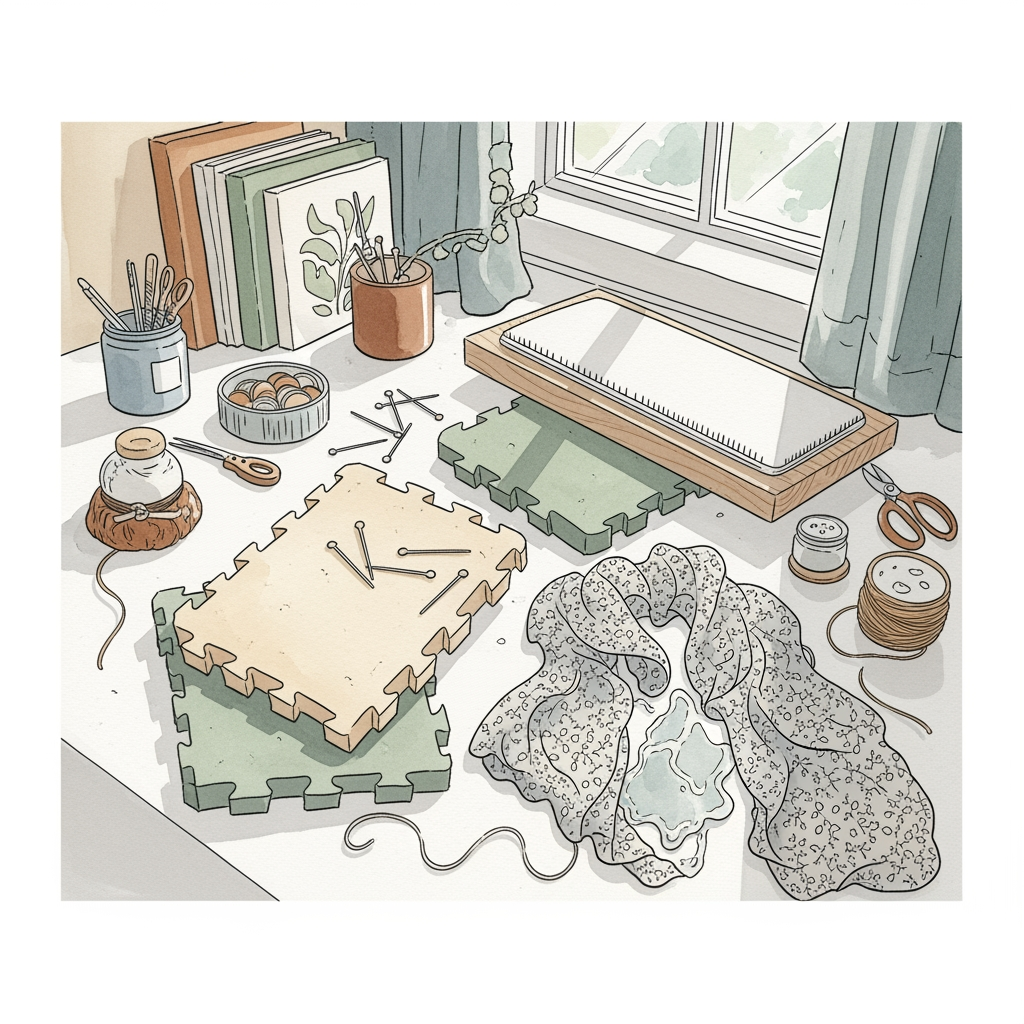
Boye mats are the classic, reliable choice that many of us have relied on for years. Their interlocking design allows you to customize the size of your workspace, making them perfect for anything from tiny baby booties to oversized adult cardigans.
The foam is dense enough to hold a pin securely, yet soft enough that you won’t struggle to insert them. Because they are modular, you can store them away in small spaces, which is a massive benefit for knitters living in apartments.
One minor drawback is that the interlocking teeth can occasionally separate if you are blocking a very heavy, wet wool sweater. Keep a few heavy books or weights handy to hold the edges down if you are blocking a dense, water-heavy piece.
Cocoknits Blocking Mat and Pins Set Features
Cocoknits has refined the blocking experience by focusing on the tactile needs of the modern knitter. Their mats are made from a heat-resistant, eco-friendly material that feels significantly more premium than standard hardware-store foam.
The standout feature is the inclusion of the magnetic grid, which helps you align your pieces with mathematical precision. If you are blocking a complex lace shawl, this level of accuracy is not just a luxury; it is a necessity for symmetry.
While the price point is higher than basic foam tiles, the durability and high-quality construction justify the investment. If you frequently knit intricate garments that require precise measurements, this set will likely be the last one you ever need to buy.
Clover Blocking Mats: Durable Grid Surface
Clover mats are renowned for their printed grid lines, which act as a constant visual guide for your knitting. If you struggle with keeping your garment edges square, these lines take the guesswork out of the process.

The surface is firm and provides excellent resistance, ensuring that your pins stay exactly where you place them. This is vital when working with high-twist yarns that have a tendency to "snap back" to their original shape.
These mats are best for knitters who value consistency and structural integrity above all else. While they don’t offer the modular flexibility of some other brands, the stability of the grid surface is unmatched for garment shaping.
Darice Foam Blocking Boards: Best for Budget

If you are a beginner or simply looking for an affordable way to get started, Darice boards are an excellent entry point. They provide a functional, no-frills surface that gets the job done without breaking the bank.
They are lightweight and easy to manage, making them a great choice for knitters who don’t have a dedicated craft room. You can easily set them up on a dining table and tuck them away when the project is dry.
The foam is slightly softer than premium brands, which means it may show wear and tear faster over time. However, for the price, they offer unbeatable value and are perfectly adequate for blocking standard wool or acrylic garments.
Beadsmith Large Blocking Board for Garments
The Beadsmith board is a heavy-duty option that feels more like a permanent piece of studio equipment. Its size is perfect for blocking full-sized sweaters, as you can often fit an entire front or back panel on a single board.
Because it is a single, large piece rather than a puzzle-like mat, you don’t have to worry about the surface shifting or gaps appearing between tiles. This creates a perfectly flat, uninterrupted surface for your delicate work.
This is an ideal choice for the dedicated garment knitter who has the storage space to accommodate a larger board. If you are tired of your blocking mats pulling apart mid-process, this solid-surface option will solve your frustration instantly.
Essential Factors for Choosing Blocking Boards
When selecting a board, consider the fiber content of your projects first. If you primarily work with heavy, bulky wools, you need a high-density foam that won’t compress under the weight of a water-logged garment.
Think about your storage situation as well. If you have limited space, modular mats are superior, but if you have a dedicated workspace, a solid board provides a more stable, professional surface.
Lastly, consider the pins you intend to use. Some boards are designed specifically for T-pins, while others work better with the specialized combs or wire-blocking kits used for lace. Match your board to your preferred blocking method for the best results.

Why Grid Markings Matter for Custom Shapes
Grid markings are not just for show; they are essential for achieving professional-looking seams. When you are blocking a sweater front and back, they must be identical in size to ensure the side seams line up perfectly.
Without a grid, it is incredibly easy to accidentally stretch one side of a garment more than the other. This leads to twisted seams and a garment that hangs unevenly when worn.
Use the grid to verify that your ribbing is not over-stretched and that your armholes are symmetrical. Precision in blocking is the secret to making handmade garments look like they came from a high-end boutique.
Proper Techniques for Pinning Wet Garments
Always start by pinning the corners of your garment to establish the desired dimensions. Once the corners are set, work your way toward the center, ensuring the tension is even across the entire surface.
When pinning, insert the pin at an angle pointing away from the garment’s edge. This creates leverage that holds the fabric firmly in place, preventing it from slipping back toward the center as it dries.
Avoid over-stretching the fabric, especially with delicate fibers like silk or alpaca. These fibers can lose their stitch definition if forced beyond their natural capacity; let the yarn relax into the shape rather than fighting it.
Maintaining Your Blocking Mats for Longevity
To keep your mats in top condition, always ensure your garment is thoroughly blotted with a towel before placing it on the board. Excessive water can pool in the foam, which may cause mold or degrade the material over time.
Clean your mats periodically with a damp cloth and mild soap to remove any dye residue or dust. If you use pins frequently, try to vary your pinning spots so you don’t wear out the same sections of the foam.
Finally, store your mats flat or upright in a cool, dry place to prevent warping. With proper care, a good set of blocking mats will last for years of successful garment finishes.
Investing in a quality blocking board is a commitment to the longevity and beauty of your knitting. By choosing the right surface and mastering the art of pinning, you elevate your work from a craft project to a wearable piece of art. Take your time, trust your measurements, and enjoy the satisfaction of a perfectly blocked garment. Your stitches deserve the best foundation you can provide.
