6 Best Felted Wool Mats For Steam Blocking To Own
Discover the 6 best felted wool mats for steam blocking. Learn how these heat-resistant surfaces ensure precise, professional results for your fiber projects.
Achieving a professional finish on your hand-knits depends entirely on the quality of your blocking surface. Steam blocking requires a mat that can withstand high temperatures while providing a secure base for your pins. Investing in a high-quality felted wool mat is a game-changer for shaping lace, sweaters, and delicate colorwork. Here are the six best options to elevate your finishing process.
Knitter’s Pride Wool Blocking Mats: Best Overall
These mats hit the sweet spot between density and heat resistance, making them a staple in many professional studios. They offer a firm surface that prevents the "spring-back" often seen with cheaper foam alternatives.
The interlocking design allows you to customize your workspace based on whether you are blocking a small swatch or a full-sized adult sweater. Because they are made from high-quality wool, they grip your knitting naturally, reducing the need for excessive pinning.
If you frequently work with luxury fibers like alpaca or cashmere, these mats provide the gentle, stable environment needed to open up stitches without distorting the fabric. They are the most versatile choice for the serious hobbyist.
Colonial Needle Felted Wool Mat: Best for Travel


When you are attending a knitting retreat or traveling to a workshop, you need a blocking solution that doesn’t take up your entire suitcase. This mat is thin, lightweight, and incredibly portable without sacrificing the heat-retention properties of wool.
It is ideal for blocking small items like socks, cowls, or individual lace motifs on the go. While it lacks the thickness of larger stationary mats, it provides a perfectly flat, heat-safe surface that fits easily into a project bag.
Just remember that because it is thinner, you will need to place it on a hard, level table to avoid uneven blocking. It is an essential tool for the knitter who refuses to compromise on finishing quality while away from home.
Clover Thick Wool Blocking Mat: Best for Precision
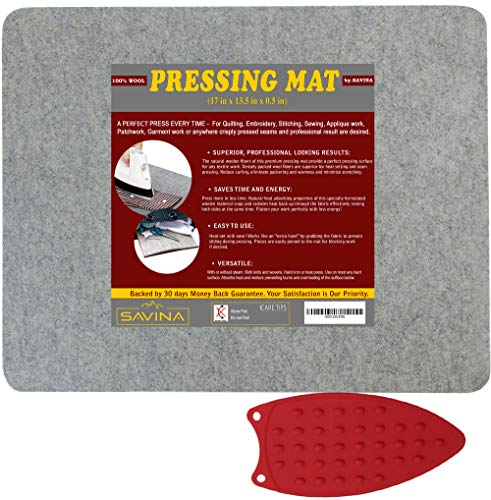
Precision is the hallmark of this mat, designed specifically for knitters who obsess over stitch alignment and symmetry. The density of the wool fibers ensures that your pins stay exactly where you place them, even when under tension.
The thickness of the material allows for deep steam penetration, which is vital when you are trying to "set" the memory of a wool yarn. If you are blocking a complex cable pattern, this mat will hold the weight of the fabric without sagging.
It is a premium choice, and the price reflects the quality of the felt. For those who invest dozens of hours into a single garment, this mat ensures that the final blocking stage is as reliable as the knitting itself.
Nancy’s Knit Knacks Wool Board: Best for Stability
If you prefer a solid, non-collapsible surface, this board is the gold standard for stability. It provides a rigid foundation that is particularly helpful when you are blocking heavy sweaters that require significant stretching.
The construction is robust, standing up to years of repeated steam and pin pressure without warping or developing divots. It is the kind of tool that you buy once and pass down to the next generation of knitters.
While it takes up more storage space than a folding mat, the trade-off is a perfectly consistent surface. For knitters who work with heavy wools or structured garments, the peace of mind provided by this stability is invaluable.
Woolery Premium Felted Wool Pad: Best for Durability

Durability is the primary concern when you are using a steam iron directly against a mat. This pad is engineered to handle high heat and moisture absorption without degrading or smelling like wet sheep.
The felt is exceptionally dense, which means it won’t compress over time even if you are constantly pinning heavy items into the same spots. It creates a smooth, uniform surface that won’t leave indentations on your finished work.
This is an excellent investment for a high-volume knitter who blocks projects on a weekly basis. It maintains its shape and performance long after cheaper synthetic mats would have begun to crumble or melt.
Dharma Trading Co. Wool Mat: Best Budget Option
You don’t need to break the bank to get the benefits of a wool blocking surface. Dharma Trading Co. offers a high-quality felted wool pad that provides the essential heat-resistance and grip required for effective steam blocking.
While it may not have the bells and whistles of modular interlocking systems, it offers a large, flat surface that is perfect for blocking shawls or scarves. It is a no-nonsense tool that performs exactly as advertised.
If you are a beginner looking to upgrade from cardboard or towels, this is the most logical place to start. It provides a professional-grade surface at a price point that leaves more room in your budget for quality yarn.
Why Felted Wool Is Superior for Steam Blocking
Felted wool is naturally heat-resistant, which is the most critical feature when you are applying steam to your hand-knits. Unlike synthetic foam mats, which can melt or off-gas harmful chemicals under high temperatures, wool remains inert and safe.
Furthermore, the natural "tooth" of the wool fibers acts as a secondary grip for your knitting. When you pin your project, the fibers of the mat interlock with the fibers of your yarn, keeping your work from shifting while it cools and sets.
- Heat Tolerance: Withstands high steam settings without warping.
- Moisture Management: Absorbs excess steam, preventing the "soggy" feel of towels.
- Natural Grip: Reduces the number of pins required for delicate lace.
How to Maintain Your Wool Mat for Long-Term Use
To keep your mat in top condition, always allow it to dry completely in a well-ventilated area after every use. Storing a damp mat can lead to mildew, which is the last thing you want near your hand-dyed wool.
Avoid using harsh detergents if you need to clean it; a gentle soak in cool water with a drop of wool wash is sufficient. Never put your mat in the dryer, as the heat and agitation will cause it to shrink and lose its flat shape.
If you use pins frequently, try to vary your pinning locations over time. This prevents the mat from developing permanent "tracks" or thinning out in specific high-traffic areas, extending the life of your investment significantly.
Essential Tips for Perfect Steam Blocking Results
Always hover your iron about an inch above the project rather than pressing it directly into the fabric. This allows the steam to permeate the fibers and relax them without crushing the stitch definition or causing unwanted shine.
Wait until the garment is completely cool and dry before removing the pins. The cooling process is when the yarn "locks" into its new shape; removing pins too early will result in the fabric pulling back toward its original, unblocked state.
- Test a Swatch: Always steam your swatch first to see how the fiber reacts.
- Use Rust-Proof Pins: Never risk staining your hard work with cheap metal pins.
- Don’t Over-stretch: Let the fiber dictate the shape, don’t force it beyond its natural elasticity.
Frequently Asked Questions About Blocking Mats
Can I use a towel instead of a wool mat? While towels are better than nothing, they lack the density to hold pins securely and often don’t provide a perfectly level surface. They also hold too much moisture, which can prolong drying times and lead to uneven results.
Will the steam smell like wet wool? High-quality, clean felted wool mats should have a very faint, pleasant scent when steamed. If you notice a strong, unpleasant odor, it may be a sign that the mat needs a gentle cleaning or that the wool quality is low.
How do I store my mats to keep them flat? If you have interlocking mats, keep them stacked flat under a bed or on a shelf. If you have a large single-piece mat, rolling it loosely is usually fine, but laying it flat is always the best way to ensure it remains ready for your next project.
Choosing the right felted wool mat is about matching your project needs with the right level of support and heat resistance. Whether you prioritize portability, durability, or precision, these options provide the professional foundation your hand-knits deserve. Take your time, choose wisely, and enjoy the transformative power of a perfect block.