6 Best Ball Winders For Scrap Yarn Management
Tame your scrap yarn with these six top-rated ball winders. Discover durable, efficient tools to organize your stash and simplify your next craft project.
Every knitter eventually reaches a point where their stash becomes a chaotic mountain of tangled, unmanageable scrap yarn. Transforming these leftover ends into neat, center-pull cakes is the secret to reclaiming your sanity and making those small bits of fiber actually usable for colorwork or striped projects. Investing in a quality ball winder is the single most effective way to turn clutter into a curated resource. Let’s explore the best tools to help you organize your stash and keep your creative flow uninterrupted.
Stanwood Needlecraft Large Metal Ball Winder


This is the gold standard for many serious knitters who find themselves winding large quantities of yarn regularly. The heavy-duty metal gears provide a level of durability that plastic models simply cannot match, especially when you are dealing with heavy worsted or bulky weight scraps.
Because it features a large capacity, you can easily handle those long, leftover skeins from sweater projects without having to stop and restart. The metal construction ensures that the internal mechanics don’t strip over time, which is a common failure point in cheaper alternatives.
If you are a prolific knitter who values a "buy it once" approach, this is your best bet. While it carries a higher price tag, the mechanical reliability makes it a worthy investment for your studio.
KnitPicks Yarn Ball Winder: Best Budget Pick
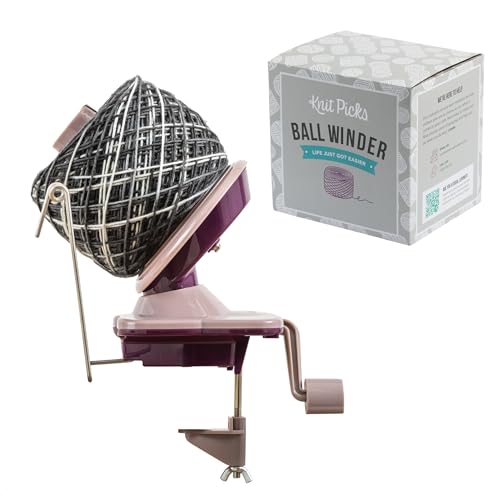
If you are just starting your journey into yarn organization, you don’t necessarily need a professional-grade machine to see results. This winder is perfect for those who have a modest collection of scrap yarn and want an affordable, entry-level solution.
It handles standard fingering and sport weight yarns with ease, producing a consistent center-pull cake that fits perfectly in a yarn bowl. The clamp is sturdy enough for most standard tables, though you should be mindful of the surface thickness before mounting it.
It is a fantastic tool for the occasional user who needs to tidy up a few leftovers after a sock project. Just be aware that it isn’t designed for heavy, continuous use, so take your time and don’t force the handle if you encounter resistance.
Lacis Wooden Yarn Winder: Durable Choice

For those who appreciate the aesthetic of their tools, the Lacis wooden winder is a beautiful and functional addition to any craft room. Beyond its looks, the wooden construction offers a satisfying, tactile experience that feels sturdier than many plastic competitors.
This winder is particularly well-suited for delicate fibers that might snag on rougher plastic edges. The smooth finish ensures your hand-dyed wool or fine alpaca blends glide onto the spindle without catching or fraying.
While it requires a bit more care to keep the wood in pristine condition, it is a reliable workhorse for the thoughtful knitter. It bridges the gap between a decorative piece and a functional tool, providing a stable winding experience.
Nancy’s Knit Knacks Heavy Duty Yarn Winder
This winder is engineered for those of us who treat yarn management like a serious hobby. It features a unique design that handles a wide range of yarn weights, from cobweb lace to chunky, without skipping a beat.
The real advantage here is the tension control, which is vital when you are winding high-twist yarns that tend to "jump" off the cake. A well-controlled cake ensures that you won’t have a tangled mess when you reach the center of your yarn later.

If you frequently work with expensive, luxury fibers, the precision of this winder is worth the premium. It minimizes the risk of stretching your yarn, which can alter your gauge and affect the final drape of your finished garment.
U-nitt Metal Ball Winder: High Capacity
When you have a massive stash of scrap yarn from years of blanket making, you need a winder that can keep up with the volume. The U-nitt is designed specifically for high-capacity winding, allowing you to create large, dense cakes that save space in your storage bins.
The metal gears and robust frame mean you can wind at a faster pace without worrying about the machine wobbling or shifting on your table. It is an ideal choice for the knitter who likes to spend a dedicated afternoon organizing their entire collection at once.
This is not a delicate tool, but rather a robust piece of equipment meant for heavy lifting. If your scrap yarn stash is overflowing, this winder will help you consolidate it into a tidy, manageable library of fiber.
CHIAOGOO Yarn Winder: Reliable Performance
ChiaoGoo is a brand synonymous with quality in the knitting world, and their yarn winder lives up to that reputation. It offers a smooth, consistent winding action that rarely results in the dreaded "yarn barf" or tangles that plague lower-quality winders.
The design is straightforward and intuitive, making it a great choice for knitters who want a tool that "just works" right out of the box. It is particularly effective at maintaining even tension, which is crucial for preventing your yarn from becoming stretched or distorted.
If you already love their circular needles, you will find this winder to be a logical and reliable addition to your kit. It is a solid, mid-range option that balances performance, durability, and ease of use perfectly.
Essential Features for Your First Ball Winder
When shopping for your first winder, prioritize a sturdy clamp that fits your primary knitting table securely. A winder that wobbles or slides during use will lead to uneven cakes and can even damage your yarn.
Look for a smooth spindle rotation, as any hitch in the movement will translate into inconsistent tension. You should also consider the gear material; while plastic is fine for occasional use, metal gears provide longevity for those who plan to wind frequently.
- Clamp stability: Ensures the unit doesn’t tip during high-speed winding.
- Tension guide: Essential for keeping the yarn taut and the cake dense.
- Capacity: Choose based on whether you wind single socks or full sweater quantities.
Why Center Pull Cakes Save Your Scrap Yarn
Center-pull cakes are the ultimate solution for scrap yarn because they stay put while you knit. Unlike a traditional ball that rolls across the floor and picks up dust, a cake sits neatly in a yarn bowl or on your table.
This organization method allows you to easily pull from the center, preventing the yarn from twisting as you work. It is especially helpful when you are working with multiple strands or colorwork, as it keeps your active yarn accessible and organized.
By turning your scraps into cakes, you can see exactly how much yardage you have left at a glance. This helps you plan your next project more effectively and reduces the frustration of running out of yarn mid-row.
Maintaining Gears for a Smooth Winding Action
Even the best winders require a little bit of love to keep them running smoothly over the years. Periodically check the gears for any stray fibers or dust, as these can accumulate and cause the mechanism to grind or seize up.
A tiny drop of food-safe lubricant on the main gear can work wonders if you notice the handle becoming stiff or noisy. Always wipe away any excess oil so it doesn’t transfer to your yarn, which could potentially stain delicate fibers.
Treat your winder like a precision tool rather than a disposable appliance, and it will serve you for years. Regular maintenance ensures that every cake you wind is as smooth and consistent as the first.
Troubleshooting Common Yarn Winder Tension Issues
If your yarn is winding too loosely, your tension guide might be too far from the spindle or not providing enough friction. Try holding the yarn slightly taut with your fingers as you feed it into the guide to help the winder do its job.
Conversely, if the cake is too tight, you risk stretching the fibers, which can ruin the elasticity of wool or the structure of a delicate blend. Adjust your grip or the tension guide to ensure the yarn flows freely without being pulled taut.
- Uneven cakes: Ensure the yarn is feeding into the guide at a consistent angle.
- Tangles: Check the spindle for hidden snags or rough plastic burrs.
- Slippage: Make sure the clamp is tightened fully to the table edge.
Finding the right ball winder is less about buying the most expensive tool and more about matching the equipment to your specific knitting habits. Whether you choose a budget-friendly plastic model for occasional use or a heavy-duty metal unit for a massive stash, the goal remains the same: simplifying your process. Once your scraps are transformed into neat, organized cakes, you will find yourself reaching for them far more often. Happy winding, and may your stash always be a source of inspiration rather than stress.