
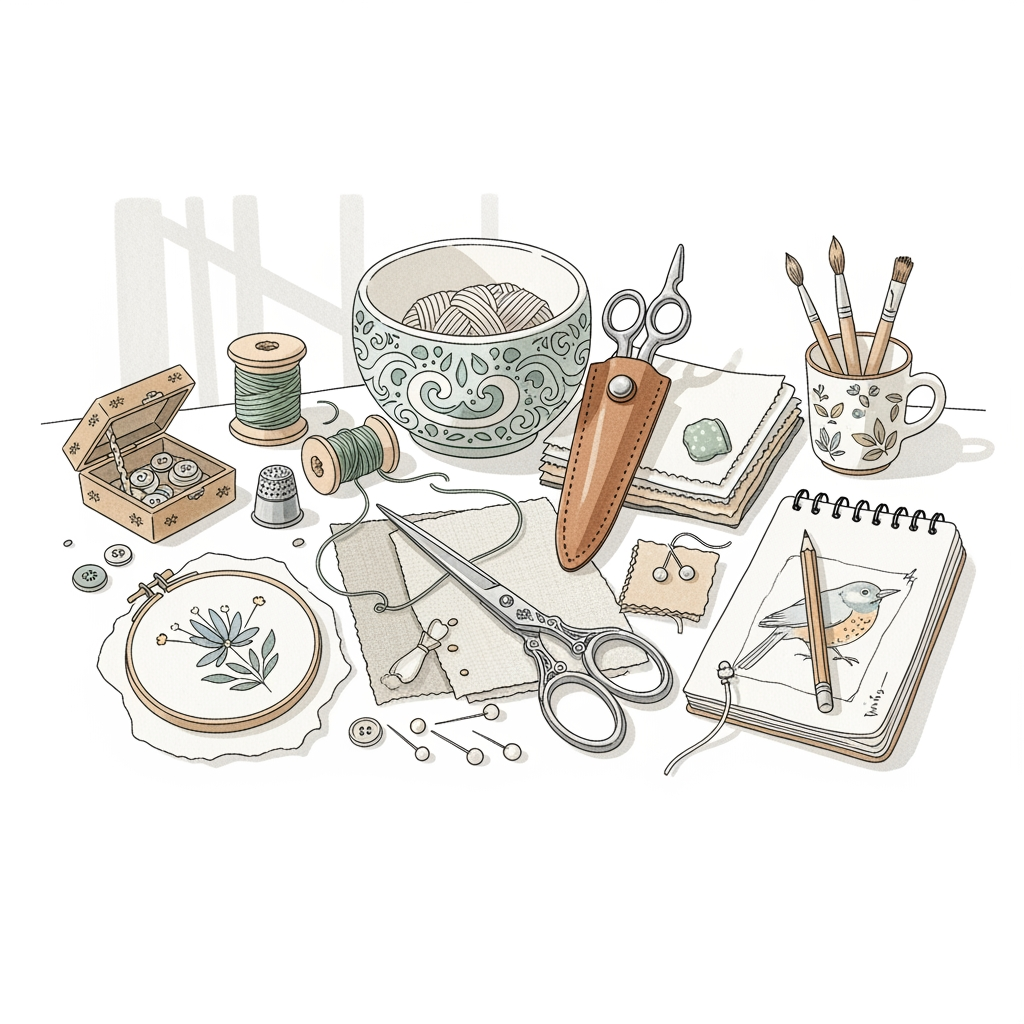
6 Best Fiber Shears For Thick Warp Trimming
Struggling with thick fibers? Discover our top 6 best fiber shears for thick warp trimming to achieve clean, professional results. Shop our expert guide today.
Taming unruly warp ends requires a tool that balances sharpness with structural integrity. When a loom is packed tight and the warp threads are under tension, dull blades will fray the fiber rather than severing it cleanly. Investing in a dedicated pair of shears transforms a tedious finishing task into a seamless part of the weaving process. Choosing the correct tool ensures that every cut is precise, preventing accidental nicks to the woven web itself.
Gingher Knife Edge Shears: The Heritage Choice


Gingher knife-edge shears represent the gold standard for many traditional weavers. The blade geometry is engineered to provide a smooth, consistent shearing action that prevents fibers from slipping away from the cutting point.

The forged steel construction offers a significant weight advantage when dealing with heavy, natural fibers like linen or thick cotton warps. Because they hold an edge exceptionally well, they are ideal for high-tension environments where constant, reliable cutting is mandatory.
- Pros: Incredible durability and legendary blade longevity.
- Cons: These shears are heavy and require consistent maintenance to prevent rust.
Ultimately, these are the shears for the maker who views their tools as a lifelong investment. They reward the user who keeps them oiled and stored in a dry environment.
Kai 7250 Professional Shears: Best for Precision

Kai shears utilize high-carbon stainless steel that feels distinctively different from traditional carbon steel options. The balance is exquisite, making them an excellent choice for intricate trimming tasks near the lease sticks or within tight shed openings.
The inclusion of an adjustable pivot screw is the standout feature here. This allows the tension to be fine-tuned so the blades meet perfectly across their entire length, regardless of the fiber diameter being trimmed.
If a weaver prioritizes ergonomics and a feather-light feel, the Kai 7250 is the superior choice. They reduce hand fatigue during long finishing sessions where hundreds of warp ends must be trimmed to an even length.
LDH Midnight Edition Shears: For Serious Crafters
LDH scissors are crafted with a black industrial coating that serves a functional purpose beyond aesthetics. This finish provides a smoother glide against the fibers, ensuring that even sticky wool or mohair warps do not snag or drag during the cut.
The Midnight Edition features a distinct, weighted feel that communicates quality with every snip. They are remarkably sharp, often arriving ready to slice through delicate silk or heavy-duty rug warp without hesitation.
Consider these shears if the workspace often involves a mix of synthetic and natural fibers. The non-stick coating minimizes residue buildup, keeping the blades cleaner for longer periods of time.
Fiskars Amplify Shears: Top Budget-Friendly Pick

Fiskars Amplify shears address the common problem of blades separating when cutting thick, multi-ply warp bundles. The integrated mechanism senses the thickness of the material and adjusts the blade alignment automatically.
This “sensing” technology prevents the frustrating phenomenon where the fibers simply fold over the blades instead of being cut. While the handle material is primarily high-grade plastic, the performance does not suffer, making them a pragmatic choice for the studio.
- Best for: Students or hobbyists who need reliable performance without a professional-level price tag.
- Tradeoff: The tactile feedback is less refined than forged steel, but the mechanical consistency is excellent.
These are the most forgiving shears for those new to fiber arts. They eliminate the guesswork of blade tension entirely.
Wiss Industrial Shears: The Heavy-Duty Workhorse

Wiss shears are built for the harshest conditions found in a high-volume weaving studio. They are designed to withstand heavy, repetitive use, often outlasting lighter alternatives by years in demanding environments.
The blades are thick and rigid, meaning they do not flex even when tackling doubled-up heavy cotton or cordage. While they may feel slightly clunky for delicate work, their strength is unparalleled when finishing heavy tapestry warps or thick rugs.
If the fiber diet consists of thick, abrasive, or industrial-grade materials, Wiss is the tool for the job. They are unapologetically utilitarian and built for performance over refinement.
Havel’s Ultra-Pro Shears: Best for Mixed Media

Havel’s Ultra-Pro shears are prized for their ultra-sharp, serrated edges which are specifically designed to grip fibers. This serration is a game-changer when working with slippery, high-sheen materials like rayon or Tencel, which tend to slide away from standard blades.
The blades provide a “biting” action that keeps the warp ends stationary during the cut. This results in a crisp, clean finish that requires very little cleanup.
For those who frequently alternate between slippery synthetic fibers and coarse natural wools, these offer the most versatility. They provide a high level of control without requiring the user to exert significant manual pressure.
How to Choose the Right Shears for Your Project
Selecting the right shears depends primarily on the material’s structural density. Fine silk or wool warps require smooth, razor-sharp blades, while coarse rug warp necessitates rigid blades that won’t flex under pressure.
Always consider the frequency of the task. If trimming happens for hours at a time during large-scale loom setups, prioritize ergonomics and weight distribution.
- Match weight to fiber: Heavy fibers need heavy steel; light fibers need balanced, thinner blades.
- Assess your hand size: A tool that is too large or too heavy will cause premature cramping.
The goal is a clean cut in a single motion. If the blades require multiple “chomps” to get through a bundle, the tool is likely too light for the fiber.
Keeping Your Fiber Shears Sharp and Rust-Free
Maintaining shears is as critical as keeping loom parts lubricated. Wipe blades down after every session to remove lint, dust, and fiber oils which can attract moisture and lead to rust.
Use a dedicated drop of sewing machine oil on the pivot screw periodically to ensure smooth operation. Never use professional shears on anything other than fiber; cutting paper, wire, or adhesive tape will ruin the edge geometry within seconds.
- Storage: Keep shears in a dedicated sheath or fabric roll rather than tossing them into a cluttered tool drawer.
- Sharpening: Seek out professional scissor sharpeners who understand specialized blade angles rather than attempting DIY methods with home tools.
Treating the tool with respect ensures that the blades remain keen for decades of use. Dull blades are not just frustrating; they are dangerous, as they require more force to use, increasing the risk of slips.
Technique for a Clean, Even Trim on Warp Ends
A clean trim starts with tension control. Ensure the warp is properly tensioned on the loom before attempting to trim; slack threads are nearly impossible to cut evenly.
Use the full length of the blades whenever possible rather than just the tips. This uses the scissor’s natural mechanical advantage and ensures a clean, perpendicular slice through the warp bundle.
Guide the bottom blade along the edge of the weaving or the lease sticks to maintain a consistent distance. If trimming a large surface area, work in small, measured sections to maintain alignment and avoid “drift.”
Bent vs. Straight Handles: Which Is Better?
Bent-handled shears are designed specifically for cutting on a flat surface. The angle of the handle keeps the user’s knuckles lifted above the work table, allowing for a long, flat, and continuous stroke.
Straight-handled shears are often preferred for vertical work or when trimming in awkward, tight spaces within the loom frame. They offer better visibility of the tip but can be uncomfortable for long, tabletop trimming sessions.
- Bent handle: Essential for efficiency and precision on flat surfaces.
- Straight handle: Best for maneuverability and reaching into narrow gaps.
Most weavers find that a bent-handled pair is the primary workhorse, while a smaller, straight-handled pair is an invaluable secondary tool for touch-ups.
Properly maintained shears are the silent partners in every successful weaving project. By investing in a high-quality tool and learning to respect its unique mechanical properties, the finishing process becomes a satisfying conclusion to the craft rather than a frustrating chore.
