6 Best Craft Awls For Starting Pilot Holes Worth Owning
Struggling with precise leatherwork? Discover the 6 best craft awls for starting pilot holes to ensure accurate, professional stitching. Shop our top picks today.
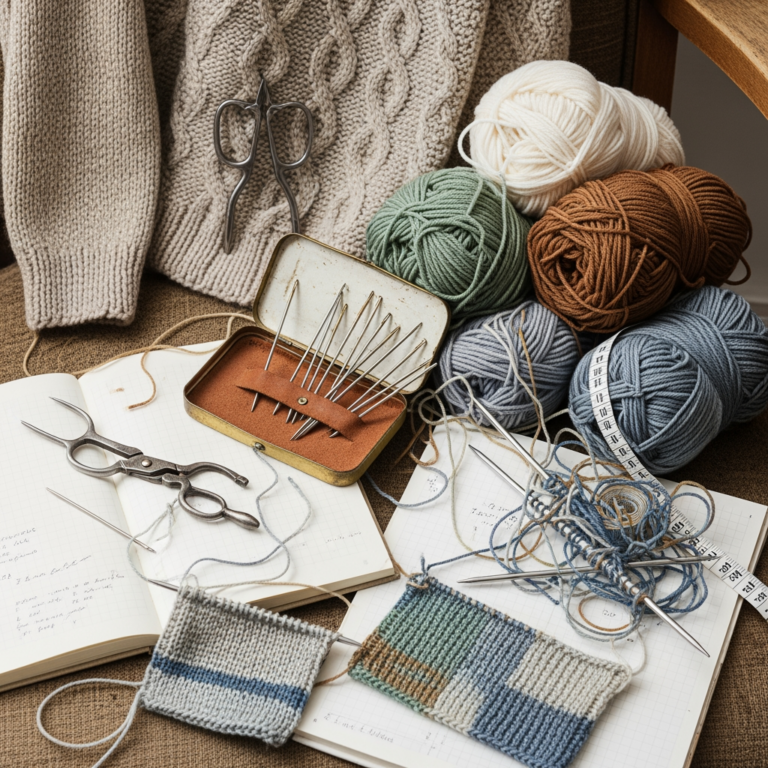
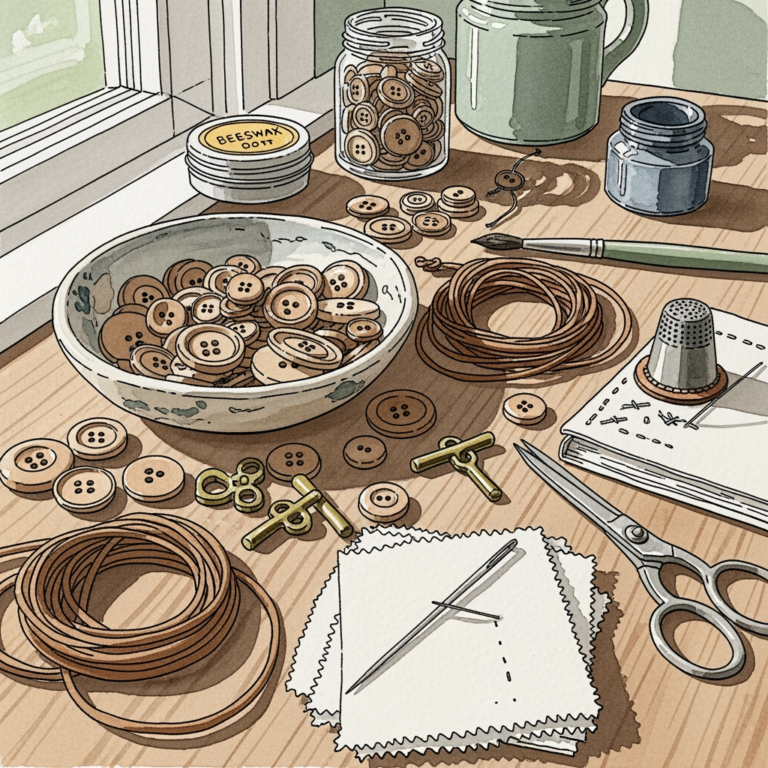
Creating pilot holes for leather accents, custom buttonholes, or precise hardware placement is a foundational skill for any serious fiber artist. While many knitters focus solely on yarn and needles, the right tool for structural modifications can bridge the gap between a amateur-looking project and a professional-grade garment. Choosing the wrong implement often leads to frayed fibers or uneven spacing that ruins the drape of a finished piece. This guide evaluates six essential craft awls to ensure every pierce is clean, accurate, and perfectly sized for the task.
Clover Tapered Awl: Best for All-Around Use


The Clover Tapered Awl stands out as a versatile staple for knitters who frequently experiment with mixed-media projects. Its gentle taper allows for gradual hole expansion, which is critical when working with dense, non-superwash wools that might otherwise snap if forced.
This tool excels when adding leather labels to a finished shawl or poking holes for thick, rustic buttons. Because the point is sharp but not overly aggressive, it minimizes the risk of cutting through delicate protein fibers.
If the goal is a tool that functions reliably across various materials—from heavy felted wool to thick leather strapping—this is the most balanced choice. It offers enough precision for detail work without requiring the raw strength of a heavy-duty industrial punch.
Dritz Ergonomic Awl: Most Comfortable Grip
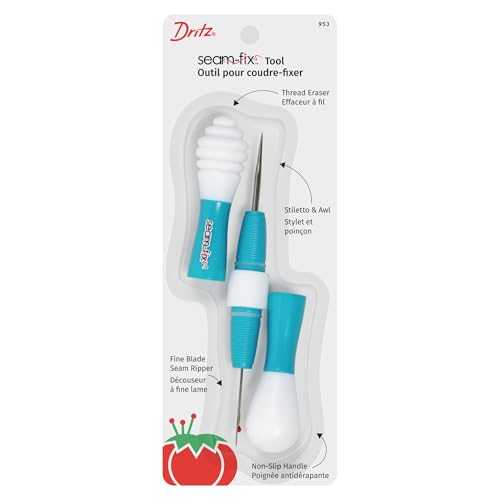
Repetitive crafting sessions can take a toll on the hands, especially for those prone to joint stiffness after long hours of cabling or complex lace work. The Dritz Ergonomic Awl addresses this by prioritizing grip geometry over a standard straight handle.
A cushioned, ergonomic handle allows for consistent pressure, ensuring a straight pilot hole even when the user is fatigued. This stability is vital when aligning multiple holes for leather bag handles or thick toggles on a chunky cardigan.
When selecting this tool, consider the size of the grip in relation to hand size and grip strength. It is an excellent investment for makers who find traditional, slim-handled tools difficult to hold during precision tasks.
Fiskars Heavy-duty Awl: Best for Tough Materials

When the project calls for structural work on thick materials—such as mounting wooden buttons onto heavy denim or leather patches—the Fiskars Heavy-duty Awl provides the necessary leverage. It is designed to handle resistance without bending or dulling prematurely.
This tool is less about delicate fiber manipulation and more about preparing a workspace for hardware. Its robust point makes quick work of tough, multi-layered fabrics that would blunt a finer needle.
Keep in mind that this is a more aggressive tool. Use it on the structural parts of a project rather than areas close to fine-gauge yarn, where the entry point might be too large for the surrounding stitches.
Tandy Leather Scratch Awl: Top for Heavy Duty Use

The classic scratch awl features a diamond-shaped blade that slices through material rather than simply pushing it aside. For leather workers who cross over into fiber arts, this provides the cleanest possible entry for heavy-duty stitching thread or cord.
Because it leaves a slightly triangular or rectangular hole, it is ideal for accommodating thicker, flat materials. If you are preparing thick, vegetable-tanned leather for a bag base, this is the industry standard.
Avoid using this on finely woven fabrics, as the blade geometry may tear the weave. Reserve it for thick, non-knit materials where hole longevity and size are the primary concerns.
General Tools Scribe Awl: For Precision Marking
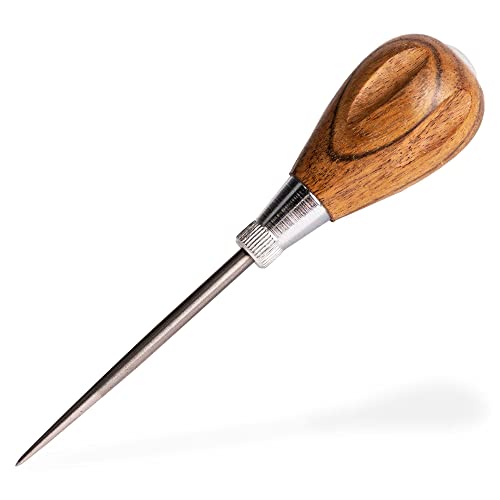
Precision is the hallmark of a high-quality finished garment. The General Tools Scribe Awl is essentially a needle-sharp metal rod that excels at marking placement for pockets, button spacing, or embroidery transfer.
While it isn’t designed to punch large holes, its ultra-fine tip is unmatched for marking exact center points on fabric. It ensures that when you do move to a larger punch, the alignment is already mathematically perfect.
For the detail-oriented knitter, this tool is indispensable for maintaining symmetry. A small, intentional mark is far better than relying on guesswork, which often results in off-center hardware.
Lineco Bookbinding Awl: Ideal for Paper and Books
Knitters often venture into journal-making for tracking patterns or swatch archives, and the Lineco Bookbinding Awl is tailored specifically for this. It is perfectly weighted for piercing signatures through paper and fabric covers simultaneously.
The shaft is designed to maintain a consistent diameter, ensuring that each hole in a binding sequence is identical in size. This consistency prevents the pulling or tearing that occurs when holes are unevenly sized.
If your crafting extends to the archival preservation of patterns or handmade journals, the precision of a bookbinding tool is unmatched. It is specialized, yet highly effective for light-duty textile work.
Tapered vs. Scratch Awls: What’s the Difference?
Understanding the mechanical difference between these tools is essential to preventing fabric damage. A tapered awl is cone-shaped and pushes fibers apart, making it the superior choice for delicate knits where you want to preserve the yarn’s integrity.
A scratch awl, by contrast, is bladed. It cuts through the material, which is ideal for leather but dangerous for loose, high-twist yarns. If you cut a strand of wool, you invite a laddering effect that can jeopardize the entire project.
Always match the tool geometry to the material tension. Use tapered tools when the integrity of the surrounding fibers must be maintained, and reserve bladed scratch awls for non-woven structural components.
How to Choose the Right Awl for Your Craft Task
Choosing the right awl begins with identifying the project’s stress points. Ask if the goal is to create a hole for a closure or to simply mark a position for later work.
- For delicate yarn/knits: Use a tapered awl to push fibers aside without severing them.
- For thick leather/straps: Use a scratch or heavy-duty awl to ensure the hole does not close up under tension.
- For paper/cardboard labels: Use a dedicated bookbinding awl to ensure uniform sizing.
Prioritize tools with high-quality steel, as a dull tip will cause you to use excessive force. Excess force is the quickest route to an accidental slip and a ruined garment.
Safety First: Tips for Handling and Storing Awls
Awls are notoriously sharp and often lack the visual profile of a sewing needle, making them easy to lose on a busy workspace. Never leave an awl sitting on a table where it could be swept into a pile of yarn or mistakenly grabbed.
Always store these tools with a protective cap or within a dedicated tool roll. Because they are often pointed in both directions (the handle and the tip), they should never be carried loose in a project bag.
When working, maintain a clear area around the project. If you are punching a hole, ensure the backing is stable; slipping off a soft surface often directs the point into the user’s hand.
Beyond Pilot Holes: Other Smart Uses for Your Awl
Beyond the obvious role of punching holes, an awl serves as a vital tool for correcting minor knitting errors. Use the point to gently lift a dropped stitch that has traveled several rows down, providing the leverage needed to hook the loop back up.
It is also an excellent tool for untangling stubborn knots in yarn that have tightened to the point where fingers cannot manipulate the fibers. The thin point can pry apart the twist of the yarn, allowing for a much easier release of the snag.
Keep one nearby during blocking as well. If a corner of a garment isn’t sitting perfectly, you can use the awl to nudge individual stitches into the correct alignment while the piece is pinned, ensuring a perfectly symmetrical finish.
Choosing the right awl is about understanding that your tools are an extension of your creative intention. By matching the correct implement to the density of your material, you ensure that every modification enhances your work rather than compromising its lifespan. Select a tool that feels natural in your hand, prioritize safety, and you will find that these seemingly small implements are some of the most reliable assets in your fiber arts arsenal.