6 Best Blocking Combs For Rapid Drying To Try
Discover the top 6 blocking combs designed for rapid drying. Learn how these essential styling tools improve airflow, reduce time, and ensure smooth results.
After hours of meticulous stitching, the final step of blocking is often the most transformative part of the knitting process. Using blocking combs can turn a lumpy, uneven swatch into a professional-grade garment with perfectly crisp edges. These tools are designed to hold your fabric in place with minimal effort, saving you time and frustration. Let’s explore the best options available to help you achieve that elusive, polished finish.
Knitter’s Pride Knit Blockers: The Industry Gold


These blockers are the gold standard for a reason: they feature multiple pins on a single, sturdy plastic base. This design allows you to secure long, straight edges in seconds rather than fiddling with dozens of individual T-pins.
If you are blocking a large rectangular shawl or a wide scarf, these will save you significant time. The wide base provides excellent leverage, ensuring the pins don’t tilt or pull out of your blocking mats when under tension.
The trade-off here is the bulk; they are not ideal for tight curves or intricate, small-scale lace motifs. However, for sheer speed and efficiency on straight runs, nothing else in the industry compares.
Cocoknits Blocking Combs: Premium Steel Quality

Cocoknits has mastered the art of combining utility with a sleek, minimalist aesthetic. Their combs are made from high-quality steel, which means they won’t bend or rust even when used with damp, heavy wool projects.
The weight of the steel provides a natural, downward pressure that helps keep the fabric flat against the mat. If you often work with heavy, protein-based fibers like alpaca or merino, this added stability is a game-changer.
Because these are slightly heavier, they aren’t prone to "popping" out of foam mats. They are a premium investment, but for a knitter who blocks frequently, the durability makes them worth every penny.
Clover Blocking Combs: Best for Delicate Lace
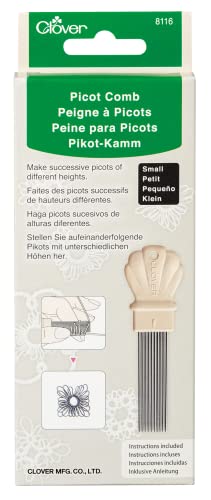
Clover is synonymous with precision, and their blocking combs are no exception. These are lighter than many competitors, making them ideal for delicate, ethereal lace projects where you don’t want to over-stretch or distort the fibers.
When working with fine lace-weight mohair or silk blends, you need a tool that holds the shape without adding unnecessary weight. The pins on these combs are exceptionally smooth, preventing them from snagging on fine, high-twist yarns.
If your project is particularly airy, the lighter construction ensures you aren’t pulling the delicate stitches out of alignment. They are the perfect balance of gentle grip and structural support.
Susan Bates Blocking Combs: Trusted Durability

Susan Bates tools have been a staple in knitting bags for generations, and their blocking combs follow that tradition of rugged reliability. They are built to withstand years of heavy use without losing their shape or the integrity of the pins.
These are an excellent "workhorse" tool for the knitter who produces a high volume of garments. Whether you are blocking thick, rustic wool sweaters or everyday cotton dishcloths, these combs hold up to the pressure.
While they may lack the modern aesthetic of newer brands, they offer a no-nonsense, functional approach. If you prioritize utility over design, these are a reliable choice that will likely last your entire knitting career.
Lacis Blocking Combs: Precision for Fine Fibers

Lacis specializes in the finer points of fiber arts, and their blocking combs reflect a deep understanding of textile precision. These are designed for the knitter who demands exact symmetry in every project.
The spacing of the pins is optimized for consistent tension, which is vital when blocking geometric lace patterns or complex cables. If you are preparing a garment for a competition or a professional photo, the precision offered here is unmatched.
They are particularly effective at gripping slippery synthetic fibers that might otherwise "creep" back into their original shape. Use these when you need your project to stay exactly where you pinned it.
Boye Blocking Combs: Reliable Value for Knitters

Boye offers a fantastic entry-level option that doesn’t sacrifice performance for price. These are perfect for the new knitter who is just beginning to understand the importance of blocking but isn’t ready to invest in high-end steel tools.
The plastic construction is lightweight and easy to handle, making them a great choice for those with limited hand strength. They provide a secure hold for standard-weight yarns and are easy to store in a compact kit.
While they may not have the same longevity as premium steel versions, they are a practical way to build your tool kit. They prove that you don’t need to spend a fortune to achieve a professional-looking finish.
Why Blocking Combs Speed Up Your Drying Process
Blocking combs increase the surface area of your fabric that is exposed to air, which is the secret to faster drying. By lifting the fabric slightly off the mat and holding it in an open, tensioned state, you encourage better airflow through the fibers.
When you use individual T-pins, the fabric often lies flat against the mat, which can trap moisture underneath. Combs create a "tent" effect that allows air to circulate underneath the garment, significantly reducing the downtime between finishing and wearing.
This is especially helpful for dense, thick-gauge sweaters that take days to dry. By utilizing combs, you can often cut your drying time in half, meaning you spend less time waiting and more time enjoying your finished work.
How to Use Blocking Combs for Perfectly Even Edges
To get the best results, start by pinning the corners of your project first to establish the overall shape. Once the corners are anchored, work your way toward the center of each side, placing the combs at even intervals.
Avoid pulling the fabric too tightly; the goal is to define the shape, not to stretch the stitches until they lose their elasticity. You want the fabric to be taut, but the stitch pattern should still look relaxed and uniform.
If you are blocking a garment with ribbing, be careful not to over-stretch the elastic edges. Use the combs to gently guide the fabric into a straight line rather than forcing it into an unnatural shape.
Essential Blocking Tools for Every Fiber Artist
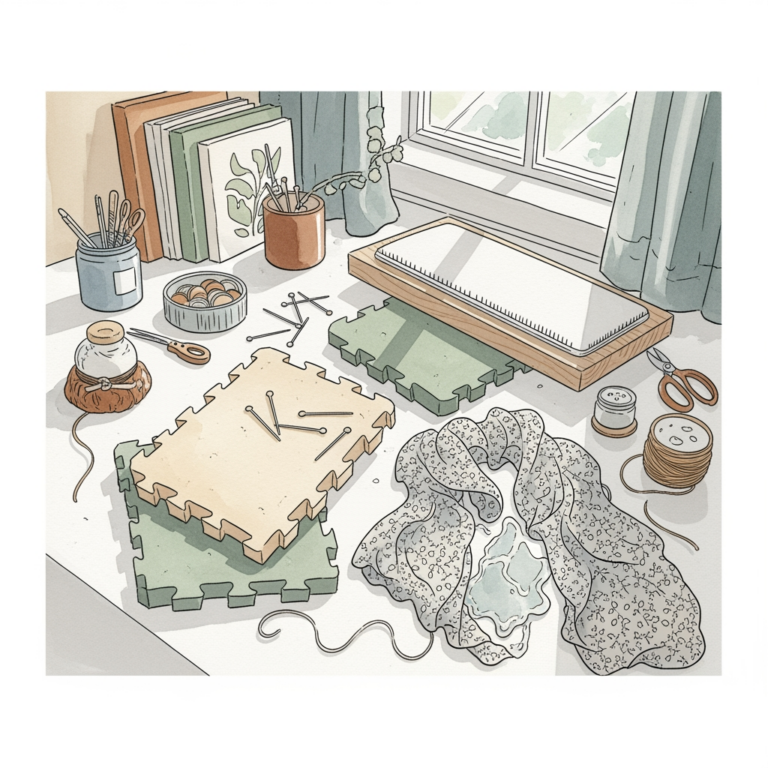
Beyond combs, a complete blocking kit should include a few other essentials to ensure success. Quality, high-density foam mats are non-negotiable, as they provide a stable base for your pins to grip.
- Rust-proof T-pins: For areas where a large comb won’t fit.
- Measuring tape: To ensure symmetry across both sides of a garment.
- Spray bottle: For misting your project without over-saturating the fibers.
- Blocking wires: For long, straight edges on shawls that require a perfectly clean line.
Having these tools on hand means you’ll never be caught off guard by a project that needs a specific type of tension. A well-equipped blocking station is the hallmark of a serious knitter.
Maintaining Your Blocking Combs for Long-Term Use
After you finish blocking, always wipe your combs down with a dry, soft cloth to remove any residual moisture or fiber dust. Even stainless steel can benefit from being kept clean and dry, especially if you work with damp wool.
Store your combs in their original packaging or a dedicated case to keep the pins from bending or getting damaged. If you find a pin has become slightly bent, you can often gently nudge it back into place using a pair of needle-nose pliers.
By treating your tools with care, you ensure they remain accurate and functional for years to come. A little bit of maintenance goes a long way in keeping your knitting process smooth and efficient.
Investing in the right blocking combs is one of the most effective ways to elevate the quality of your finished projects. Whether you choose the industrial strength of Knitter’s Pride or the delicate precision of Clover, the right tool makes all the difference. Remember that blocking is a skill that improves with practice, so don’t be afraid to experiment with different tensions. With the right gear, your hand-knits will look as professional as anything you could find in a boutique.