6 Best Background Clamps For Studio Fabric Backdrops
Secure your studio fabric backdrops with ease. Explore our expert review of the 6 best background clamps to achieve a wrinkle-free setup. Shop our top picks now.
Achieving a crisp, clean background for project photography is as vital as achieving consistent tension in a lace shawl. Just as a poorly blocked garment fails to show the beauty of the stitch pattern, a sagging or wrinkled backdrop distracts from the hand-dyed depth of a yarn’s fiber. Securing fabric requires the right hardware to maintain consistent surface tension without causing permanent damage to delicate textiles. Finding the balance between grip and fabric safety is the secret to a professional-looking fiber art portfolio.
Impact Super Clamp: Best for Heavy-Duty Setups


The Impact Super Clamp excels when the backdrop material is exceptionally heavy, such as thick wool felt or multi-layered tapestry displays. This is the industrial-strength solution for when a simple spring mechanism lacks the necessary bite to keep heavy textiles from sliding.
Because this clamp relies on a threaded handle rather than a spring, it provides a locked-in hold that will not migrate during a long day of shooting. It is the equivalent of using a heavy-duty metal circular needle when working with thick, bulky roving—reliability is the primary goal.
If the studio setup involves permanent rigging or complex overhead crossbars, the heavy weight of the clamp is a non-issue. For portable kits, however, the bulk and weight of these clamps can become cumbersome. Choose this tool when security and stability are the absolute priorities over mobility.
Neewer Spring Clamps: The Ultimate Budget Option
Neewer Spring Clamps are the standard-issue workhorse for any studio looking for cost-effective functionality. These are comparable to basic plastic knitting needles; they are affordable, easy to replace, and get the job done for the vast majority of standard projects.
These clamps are ideal for lightweight cotton muslins or sheer fabrics that do not require aggressive tension. Because they are lightweight, they will not weigh down the top edge of a backdrop stand, preventing the annoying “sag” that occurs when clamps are too heavy for the crossbar.
A common misconception is that more expensive clamps are always required for good photos. In reality, if the weight of the fabric is low, these simple spring clamps provide exactly the right amount of force. Keep a large supply of these on hand to tension multiple points along the backdrop.
Manfrotto 035 Super Clamp: The Professional’s Pick
The Manfrotto 035 is the gold standard of the industry, engineered with the precision one expects from top-tier, ergonomic knitting needles. This clamp offers a level of build quality that ensures a lifetime of service, much like investing in a set of luxury stainless steel interchangeable needles.
The leverage mechanism allows for incredible pressure without requiring massive hand strength, making it an excellent choice for photographers who need to make frequent adjustments. Its versatility extends beyond just fabric; it can grip almost anything in the studio, including light stands and table edges.
While the price point is significantly higher, the durability justifies the investment for those who prioritize long-term equipment stability. It provides peace of mind that a backdrop will not shift mid-session, protecting the integrity of the composition.
Pony Spring A-Clamps: Best for Delicate Fabrics
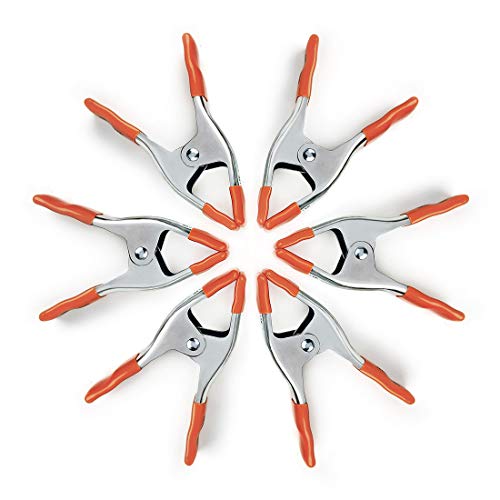
Pony Spring A-Clamps are favored for their gentle, nuanced hold on fine textiles like silk or hand-dyed merino lace fabrics. When working with delicate fibers, harsh pressure points can lead to permanent distortion or thinning, much like improper tensioning on a delicate gauge swatch.
The rubber-tipped jaws provide a soft, forgiving contact area that prevents the fabric from fraying or marking. These clamps distribute pressure over a wider area than hard-plastic alternatives, making them ideal for backing materials that show every crease and indentation.
Avoid using sharp-edged metal clamps on precious fabrics, as they can pinch and tear delicate fibers. For fine silk backdrops, the Pony A-Clamp acts as a buffer, ensuring the material remains pristine. It is the best choice for protecting the “hand” and texture of expensive studio backdrops.
Tether Tools Rock Solid A-Clamp: Most Versatile
Tether Tools specializes in equipment that integrates seamlessly into a high-paced, professional workflow. The Rock Solid A-Clamp is designed for photographers who need to mount accessories beyond the backdrop itself, such as reflectors or bounce cards.
This clamp features a reinforced structure that resists flexing, ensuring the jaw maintains a consistent grip across its entire surface. Much like a high-quality yarn bowl that keeps a cake from rolling away while providing stability for the tension, this clamp keeps the workflow organized and predictable.
If the goal is to streamline a studio space, having one type of clamp that performs multiple functions is highly efficient. The design is specifically optimized for quick, one-handed adjustments. It is a professional-grade tool that bridges the gap between raw power and delicate fabric handling.
Fovitec Muslin Clamps: A Solid All-Around Choice
Fovitec Muslin Clamps occupy the middle ground between basic budget clamps and heavy-duty mechanical options. They are specifically shaped to contour around backdrop poles, providing a flush fit that minimizes the risk of accidental slipping.
These clamps are particularly well-suited for standard muslin backdrops, providing enough grip to keep the fabric flat without causing the poles to bend. They offer a balanced approach, much like using a mid-range wood needle for working with an alpaca-blend yarn; they provide enough grip to control the material without being too aggressive.
For those setting up a home studio for the first time, these are the most reliable starting point. They are robust enough to last for years but cost-effective enough to buy in bulk. Consistency is key, and these clamps provide a uniform look across the entire backdrop edge.
How to Avoid Damaging Delicate Fabric Backdrops
- Use protective buffers: Wrap a thin piece of soft felt or silicone around the jaw if the fabric is prone to snagging.
- Avoid over-clamping: Use the minimum force necessary to hold the weight; excess pressure can permanently crush synthetic fibers or permanently stretch natural ones.
- Check for debris: Ensure the jaw is free of dust or metallic shavings before applying it to silk or fine weave fabrics.
- Rotate clamping points: If a backdrop remains hung for long periods, shift the position of the clamps slightly to prevent localized fiber fatigue.
- Store correctly: Keep clamps in a dry environment; rust from a metal clamp can transfer to your backdrop, causing irreversible staining.
Clamp Types: Spring vs. Super Clamp Showdown
- Spring Clamps: Best for quick, high-frequency adjustments; ideal for lightweight fabrics; limited in maximum tension.
- Super Clamps: Best for heavy-duty, permanent, or high-security setups; require more time to set and release; can support heavy equipment beyond the fabric.
- A-Clamps: The most ergonomic shape for most studio work; generally balance weight and grip effectively; ensure the “A” geometry allows for easy hand operation.
What to Look for in a Backdrop Clamp’s Jaw
The jaw is the interface between the tool and your expensive backdrop, and its design dictates the health of your fabric. Seek out jaws with articulated, pivoting pads. These allow the clamp to lie flat against the backdrop even when the fabric is pulled at an angle, preventing concentrated pressure points.
Avoid entirely smooth, hard plastic jaws. They offer little resistance and will likely slip on slippery fabrics like polyester or silk. Rubberized, textured surfaces are superior because they provide high friction with low pressure.
Consider the width of the jaw. A wider pad spreads the weight of the fabric over a larger surface area, which is critical for preventing wrinkles at the attachment site. Much like using a wide needle to avoid laddering, a wide jaw prevents the “gathering” effect that creates unwanted texture in your final photo.
Securing Your Backdrop Without Wrinkles or Sags
The secret to a flat backdrop is consistent, multidirectional tension. Do not rely solely on top-heavy clamping; pull the fabric taut both horizontally across the bar and vertically toward the floor using weight bags or secondary clamps.
Always start by securing the center of the fabric to the crossbar, then work outward toward the edges, similar to how you would block a rectangular shawl starting from the center outward to ensure symmetry. This prevents the fabric from pulling toward one side and becoming skewed.
If the fabric is wrinkled, clamping it tightly to a stand will not remove the creases; it will only highlight them. Steaming the fabric before applying the clamps is essential. Once the fabric is smooth and hung, apply only enough tension to hold the weight, allowing the natural drape of the fiber to do the rest of the work.
Finding the right hardware is a balancing act between the weight of your fabric and the structure of your studio. By treating your backdrop with the same care as your finest skein of yarn, you ensure that every photograph captures the quality of your work rather than the flaws of your setup.