7 Best Adjustable Magnifying Glasses For Intricate Embroidery
Struggling with detail work? Discover the 7 best adjustable magnifying glasses for intricate embroidery to enhance your precision and comfort. Shop our top picks!
Staring at a pair of size 000 needles while working on a complex lace shawl often results in eye strain that turns a meditative hobby into a chore. When working with dark, high-twist fingering weight yarns, even the best ambient lighting can fail to reveal the subtle structure of a stitch. Investing in an adjustable magnifying glass bridges the gap between frustration and precision. Choosing the right tool depends entirely on your specific project needs and your physical posture at the craft station.
Brightech LightView Pro: Best Overall Floor Lamp


The Brightech LightView Pro stands out for those who spend hours in a dedicated craft corner. Its weighted base ensures stability, which is vital when moving the lens frequently to inspect complex cable crosses or intricate lace motifs. The 2.25x magnification is perfectly calibrated for standard knitting patterns, providing enough clarity to catch split plies without causing the vertigo sometimes associated with higher power lenses.
The standout feature here is the fluid, adjustable neck that stays exactly where positioned. This allows for seamless transitions between working on the project and looking up at a pattern chart. Since the lamp provides both magnification and shadow-free LED illumination, it eliminates the need for a secondary light source that might otherwise create harsh glare on slick metal needles.
Ultimately, this is the gold standard for long-term consistency. If the workspace is stationary and the projects are varied, the durability and optical clarity of this lamp justify the floor space it occupies.
YOCTOSUN Headband Magnifier: Best Hands-Free

Headband magnifiers excel when projects require total mobility, such as when switching between a circular needle set and a tapestry needle for weaving in ends. Because the magnification moves with the head, the focus remains constant even if the knitter shifts position or leans forward. The interchangeable lens plates offer a range of magnifications, which is essential when jumping between chunky wool projects and fine lace.
The trade-off involves weight and comfort during marathon knitting sessions. While the headband design is incredibly liberating for complex colorwork, the pressure on the bridge of the nose or forehead can become noticeable after a few hours. Proper adjustment of the strap is critical to ensure it doesn’t slide down when the head is tilted toward the lap.
For those who struggle with keeping the work centered under a static desk lamp, this is the superior choice. It offers unmatched freedom for complex shaping techniques, provided the user finds the fit comfortable enough for extended wear.
Neatfi Bifocals LED Lamp: Most Powerful Light

When dealing with black yarn or deep indigo navy, standard lighting often fails to highlight stitch definition. The Neatfi Bifocals lamp compensates by offering an exceptionally bright LED output paired with a large, distortion-free glass lens. The bifocal inset provides a concentrated area of higher magnification, perfect for checking gauge or spotting dropped stitches in fine, dark-colored alpaca or mohair.
The main advantage is the sheer clarity of the lens material. Unlike cheaper plastic alternatives, the real glass resists scratching from accidental contact with sharp point protectors or stitch markers. The lens width also covers a significant portion of the work, reducing the number of times the lamp needs to be repositioned.
This lamp is built for the precision-oriented crafter who demands high contrast and sharp focus. If the primary challenge is identifying stitch texture in low-light environments, this high-powered solution is difficult to beat.
iMagniphy Lens Set: The Most Versatile Option
The iMagniphy set offers a modular approach that caters to different project requirements. It provides multiple interchangeable lenses, allowing the user to swap magnification levels depending on the project. This is a massive advantage when switching from a bulky, low-gauge sweater project to a delicate pair of stranded colorwork mittens.
Versatility, however, requires a bit of maintenance. Keeping track of the various lenses and ensuring they remain fingerprint-free is part of the routine. The build quality is sturdy, and the lens change mechanism is intuitive enough to handle mid-project without significant disruption to the rhythm of the knitting.
This is the ideal kit for the knitter who enjoys variety. It allows for a customized visual experience tailored to the specific weight and character of the yarn being worked.
Carson DeskBrite 200: Top Compact Desk Lamp
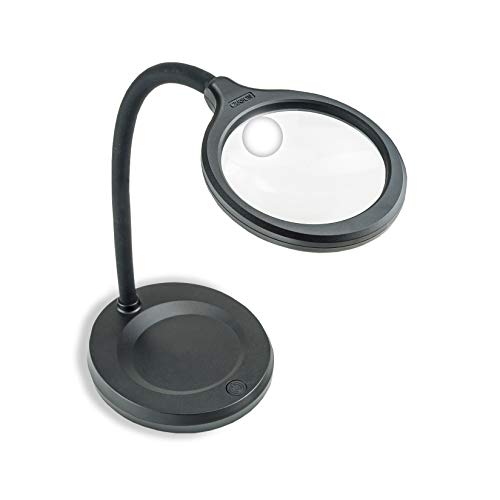
Space is often at a premium in small home studios, and the Carson DeskBrite 200 addresses this by being exceptionally portable and compact. It functions well as both a magnifying station and a standard task light. The smaller footprint means it can be moved from a dining room table to a sofa side-table with ease.
The 2x magnification is sufficient for most standard knitting tasks, while the LED illumination is bright enough to distinguish between similar colorways in a stranded project. It lacks the expansive reach of a floor lamp, but it excels in utility and ease of storage.
If the setup is temporary or shared with other household activities, the compact nature of this light is a significant perk. It provides focused, clean light without dominating the workspace.
MagniPros 3X Page Magnifier: Best for Charts

Reading complex lace charts or stranded colorwork motifs often involves squinting at small printed symbols. The MagniPros page magnifier is designed to cover an entire sheet of paper, making it perfect for reference material. By enlarging the entire chart, the risk of misreading a symbol or losing the row count is significantly reduced.
This tool is strictly for reference, not for direct knitting work. However, keeping the chart legible is just as important as the stitch quality itself. The clarity provided by the Fresnel lens ensures that complex instructions stay readable even as the eyes grow weary.
Use this for the administrative side of knitting. It prevents the fatigue that sets in when squinting at tiny font sizes, keeping the mind sharp for the actual execution of the stitches.
Co-Z Magnifying Floor Lamp: Best Budget Pick
The Co-Z lamp provides the essential features of a professional-grade magnifying light at a price point that is accessible for those just beginning their tool collection. It features a reliable glass lens and a stable stand that satisfies the basic need for hands-free magnification and lighting. While it may lack the high-end adjustable arm of more premium models, it performs the job of reducing eye strain effectively.
This model is a testament to the fact that you do not need to spend a fortune to significantly improve the comfort of the craft. It provides a solid foundation for those testing the waters of magnification.
For a budget-conscious knitter, the Co-Z is a sensible entry point. It offers a tangible improvement to the knitting experience without a heavy financial commitment.
Diopter vs. Magnification: What Do You Need?
Understanding the relationship between diopters and magnification is crucial for avoiding unnecessary eye strain. A diopter is a unit of measurement for the optical power of a lens, and as the diopter value increases, so does the magnification. A common mistake is assuming that a higher magnification is always better.
In practice, higher magnification usually comes with a smaller field of view and a shorter focal length. For knitting, a lower magnification—typically 2x to 3x—is usually more useful because it allows for a larger area of the work to be in focus at once. If the magnification is too high, the lens must be placed dangerously close to the needles, which inhibits the range of motion.
Prioritize a wider field of view over extreme magnification. Being able to see three or four stitches at once is far more helpful for checking the consistency of your tension than seeing one stitch in extreme, narrow detail.
Headband vs. Lamp: Which Style Is Right for You?
The decision between a headband magnifier and a lamp rests on whether mobility or stability is the higher priority. A lamp creates a fixed “zone of focus” that acts as a visual anchor, which is helpful for steady, rhythmic knitting. It also doubles as a high-quality light source that can be directed specifically onto the yarn.
A headband magnifier is superior for projects where the knitter frequently shifts position or moves between multiple stations. If you are a social knitter who takes projects on the go or enjoys moving from the living room to the sunroom, the headband provides a consistent view regardless of the physical environment. However, it cannot replace a good task lamp for general visibility.
Most advanced crafters eventually find that a hybrid approach—a high-quality lamp for deep focus and a simple pair of magnifying readers or a headband for travel—offers the most flexibility. Choose based on where you spend the most hours with your needles in hand.
Why LED Light Quality Matters for Your Eyes
The quality of the light source is just as critical as the strength of the lens. Poor lighting causes the pupils to dilate and constrict repeatedly, leading to rapid eye fatigue that manifests as headaches and irritability during a project. LED lights are preferred for their longevity and, more importantly, their “cool” temperature, which prevents the yarn from getting warm or dry.
Look for lights that mimic natural daylight (often labeled as 5000K or 6000K). This spectrum provides the most accurate color representation, which is vital when working with subtle shifts in variegated yarn or complex color-matching projects. Avoiding lights with a harsh yellow or blue cast ensures that the colors chosen in the shop match the reality of the work under the lamp.
Never underestimate the power of proper lighting to keep the eyes fresh. Investing in a high-quality LED light is a commitment to the longevity of your knitting hobby and your overall optical health.
Finding the perfect magnifying solution requires balancing your physical comfort with the specific demands of the project at hand. Whether you prioritize a stable desk lamp for long-form knitting or a portable headband for flexibility, the right tool should make your work feel effortless rather than strained. By selecting equipment that complements your natural knitting rhythm, you ensure that even the most intricate patterns remain a source of joy for years to come.