6 Best Sewing Cabinet Organizers For Small Studio Spaces
Maximize your crafting area with these 6 best sewing cabinet organizers for small studio spaces. Shop our top picks to streamline your workstation today.
A small studio space requires a strategic approach to organization, especially when juggling bulky yarn stashes, sewing notions, and delicate fiber tools. Choosing the right furniture turns a cramped corner into a highly efficient workstation where creative flow is never interrupted by clutter. Proper cabinetry provides a dedicated home for everything from fine lace needles to heavy-duty sewing machines. This guide evaluates six top-tier solutions designed to maximize utility without overwhelming a limited floor plan.
Arrow Gidget II: Best Portable Sewing Table


The Arrow Gidget II is the definitive choice for makers who need a sturdy foundation that can vanish when a project is complete. Its primary strength lies in its collapsible design, which allows the entire table to fold flat for storage under a bed or in a narrow closet.
When working with heavy sewing machines, stability is non-negotiable. This table offers a solid steel frame that prevents the vibration-induced jitters often experienced when sewing through thick seams or dense wool felts.
Keep in mind that portability often means sacrificing built-in drawer space. If the goal is to keep patterns, bobbins, and swatching needles within arm’s reach, look toward adding a separate rolling cart.
Sauder Craft Pro Series Cart: Best for Storage
The Sauder Craft Pro Series Cart functions less like a simple table and more like a mobile library for craft supplies. It features generous shelving that is perfect for storing yarn bins, fabric bolts, and oversized project boxes.

Deep drawers allow for the vertical organization of notions, which is the most effective way to see every needle size and stitch marker at a glance. This cart moves effortlessly on casters, making it ideal for those who prefer to pivot between a cutting table and a machine station.
Consider the physical footprint carefully, as the storage depth is significant. Ensure there is enough clearance to pull drawers out fully without bumping into other furniture in a small studio.
Kangaroo K8411 Joey II: Best Compact Combo
The Kangaroo Joey II excels by marrying a dedicated machine shelf with a side cabinet for essential tools. It is the gold standard for those who want a permanent “command center” but are restricted by a modest square footage.
The cabinet configuration is specifically engineered to keep heavy equipment contained while providing a smooth, continuous surface for guiding fabric. It eliminates the struggle of trying to keep a heavy machine balanced on a wobbly dining room chair or a temporary folding table.
The main trade-off is the learning curve of the lift mechanism, which requires periodic maintenance to ensure smooth operation. Keep the hinges clean and lubricated to prevent the mechanism from sticking over time.
South Shore Artwork Craft Table: Best on a Budget
This table proves that an efficient workstation does not need to drain the budget. It offers a clean, minimalist aesthetic with open storage cubbies, which are perfect for keeping frequently used tools visible and ready for action.
Open shelving encourages better habits because it forces a degree of orderliness to keep the space from looking chaotic. For knitters who struggle with “project creep,” this desk provides a designated perimeter for materials.
Because the unit is built from manufactured wood, avoid placing heavy, moisture-laden blocked projects directly on the surface without protection. Use a silicone mat or a dedicated blocking board to protect the laminate finish from water damage.
Best Choice Products Folding Table: Most Versatile
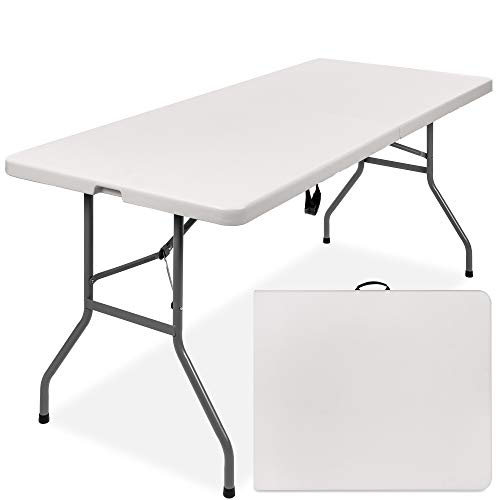
Flexibility is the hallmark of the Best Choice Products folding table. It operates on a simple hinge system that allows it to transition from a compact storage unit to a wide-reaching workspace in seconds.
This versatility is a massive asset for makers who engage in multiple fiber arts. It is just as capable of holding a sewing machine as it is of acting as a staging area for sorting yarn for a complex stranded colorwork sweater.
Because this unit is lightweight, it may lack the mass of more expensive, stationary cabinetry. If stitching heavy canvas or denim, place the table against a wall to prevent it from shifting during operation.
Sew Ready Eclipse Hobby Center: Best Multi-Use Desk
The Sew Ready Eclipse features an adjustable tabletop that tilts, making it an excellent dual-purpose desk for both sewing and drafting patterns. When the workspace is limited, having one piece of furniture that performs two distinct roles is a major win.
The built-in storage shelf under the desk is perfectly sized for keeping a spare machine or a box of needles and notions. It keeps the floor space clear, which is vital for keeping a small studio feeling open and airy.
The adjustable tilt feature is especially helpful for those who draft their own garments or spend time charting cable designs. Ensure the tilt locks are tightened securely before placing expensive electronics or delicate instruments on the surface.
How to Measure Your Space for a Sewing Cabinet
Accurate measurements are the difference between a functional studio and a crowded storage unit. Do not just measure the floor space; account for the swing radius of drawers and the distance required to sit comfortably at the machine.
Start by marking the desired footprint on the floor with painter’s tape. This visualization helps verify that the cabinet will not block natural light or impede the flow of traffic through the studio.
Always verify the height of the cabinet against the user’s height while seated. Ergonomics matter just as much in sewing as they do in knitting, and a table that is too high or too low will lead to shoulder strain during long sessions.
Understanding Airlift vs. Manual Lift Mechanisms
An airlift mechanism allows the sewing machine to transition from a stored position to a flat-bed sewing position with minimal physical effort. This is essential for those who want to keep their machine protected when not in use.
Manual lifts are often more durable over the long term because they rely on fewer moving parts. However, they require the user to lift the machine’s weight, which might be a barrier for those with wrist or back sensitivity.
Evaluate the specific weight capacity of the lift mechanism before choosing a cabinet. Ensure the rated capacity exceeds the weight of the machine to prevent the mechanism from dropping unexpectedly.
Organizing Notions Within Your New Sewing Cabinet
The secret to a successful sewing studio is treating notions like a yarn stash: categorize by use and visibility. Use drawer dividers to group bobbins by color and needles by size to keep the workflow seamless.
Vertical storage is superior to horizontal piles for small items like presser feet or measuring tapes. If a cabinet lacks built-in dividers, invest in clear, modular acrylic containers that fit neatly into the provided drawers.
Create a “grab-and-go” kit for the most frequent tasks, such as changing needles or re-threading the machine. Keeping these items in a single, accessible container reduces the time spent hunting for tools during a project.
Assembling Your Cabinet: What You Need to Know
Assemble furniture in the space where it will live, as moving heavy, fully constructed cabinets through narrow doorways is difficult. Use a dedicated space on a rug or cardboard to prevent scratching the floor or the cabinet panels.
Check the hardware list before starting, and organize screws and bolts into labeled bowls. A single missing screw can halt the entire process, so inventory the parts immediately upon unboxing.
Invest in a quality screwdriver or a low-torque power drill to ensure all cam locks are tightened firmly. Loose joints can cause the cabinet to wobble over time, which compromises the accuracy of machine sewing and the longevity of the piece.
Building a dedicated sewing space is a commitment to the craft that pays dividends in both project quality and enjoyment. By choosing a cabinet that fits the specific needs of a studio and maintaining it with care, the environment becomes a support system for every future creative endeavor.